




Can Seasonal Allergies Cause Migraines? What’s the Connection?
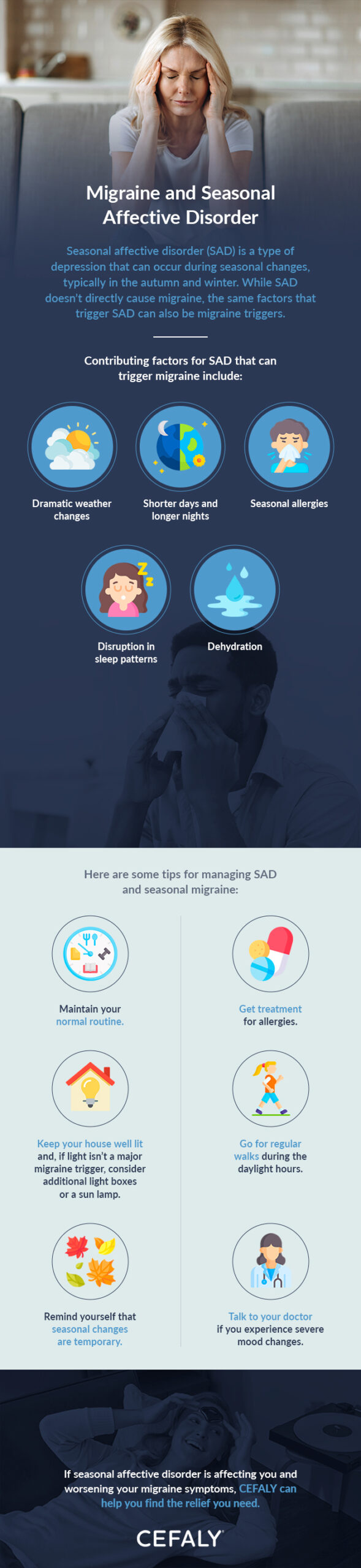
Did you know that if you have hay fever, you’re more likely to have migraine as well? Migraine attacks also can be more frequent in people who have seasonal allergies and/or asthma.
It doesn’t seem fair… and it doesn’t make sense. What’s the relationship between hay fever and headache? Whether spring, summer or fall is your sneezy season, here’s what you need to know about migraine and seasonal allergies.
Understanding Seasonal Allergies and Migraine
In spring, summer and fall (and even in winter, in warmer climates), plants release tiny grains of pollen that are carried by the wind. When they enter your eyes, nose, or lungs, your immune system identifies these pollen grains as intruders and seeks to defend your body by producing histamine. Histamine causes the allergy symptoms we all know and love: a scratchy throat, red and itchy eyes, a runny or stuffy nose, sneezing and coughing.
Mold spores can cause a similar allergic reaction. Mold allergens can be spread in dry, windy weather, or when humidity is high.
What’s the connection to migraine? For one, people with migraine might be more prone to having an allergic reaction. “If you get migraines, you have a sensitive nervous system. Your body tends to react very quickly, or overreact, to changes in your environment that it views as threats,” WebMD explains.
There are many more theories about the link between seasonal allergies and migraine. Nasal congestion could directly activate the trigeminal nerve in the nose, triggering migraine; it could cause snoring, leading to sleep apnea and headaches; and hay fever activates nerves in the parasympathetic nervous system, possibly increasing migraine frequency, according to Vincent T. Martin, MD, co-director of the Headache & Facial Pain Center at the University of Cincinnati.
People with migraine are also known to be sensitive to histamine. Studies have shown that histamine is an efficient inducer of migraine attacks, although the ways in which this works are not fully understood. Several migraine-friendly diets eliminate foods that are high in histamine, including aged cheeses, processed or smoked meats, dried fruits and fermented foods.
Read more: What Are the Best Diets for Migraines?
How Do You Know If Seasonal Allergies Are Causing Migraine Attacks?
You might notice that your migraine attacks are more frequent during times when pollen levels are high… but how do you know that allergies are the cause, and not just a coincidence?
For instance, you might be reacting to the weather, which is a trigger for three out of four people with chronic headache or migraine. Specific triggers include changes in humidity or temperature, storms, and dry or dusty conditions.
To know for sure if allergies are the problem, start tracking your migraine attacks and symptoms with the free CeCe migraine management app from CEFALY Technology. CeCe makes it easy to log your attacks over time, so that you can recognize trends, identify triggers and track treatment effectiveness.
Keep track of allergen levels, too. You can do this in the journal that’s included in the CeCe app. Or, once you have a few months of migraine logs, compare your personal migraine data to the pollen count data for your area. (Find this info on Pollen.com.) If you see that your migraine attacks definitely coincide with high-pollen or high-mold periods, then seasonal allergies may be a migraine trigger.





How to Prevent Migraine Attacks Caused by Seasonal Allergies
Your first line of defense is to avoid allergens. But pollen is everywhere, so how are you supposed to escape it? Here are some strategies to try, recommended by the American College of Allergy, Asthma and Immunology and the Allergy and Asthma Foundation of America:
- Avoid going out when allergen levels are high. Check the daily and weekly forecasts so you know what’s expected. You also can adjust your schedule to avoid the specific pollens you’re sensitive to. In spring and summer, tree and grass pollen levels are highest in the evening. In late summer and early fall, ragweed pollen levels are highest in the morning.
- Keep windows and doors shut, both in your car and at home.
- Use a certified asthma- and allergy-friendly filter and/or HEPA filtration in your HVAC system to reduce indoor allergens.
- Wear sunglasses and cover your hair when you go outside to keep pollen out of your eyes and your hair.
- Shower, wash your hair and change your clothes before bed and after gardening, working or exercising outdoors.
- Wear a NIOSH-rated 95 filter mask when doing outdoor chores.
If you’re doing everything you can to avoid seasonal allergens and you’re still suffering, it’s time to talk to an allergist. An allergist can perform a skin prick test or blood testing to determine what, exactly, you’re allergic to. Then, they may be able to prescribe medicine that can help.
Also, focus on lowering your overall migraine trigger threshold. Migraine is a complex, multifactorial condition. It’s not as simple as one bad allergy day = a migraine attack. Rather, all of your migraine triggers — as well as your migraine prevention tactics — combine to raise or lower your threshold.
Just as an example, let’s say there’s a bad day forecasted for tree pollen in your city. Will it cause a migraine attack for you?
If your migraine threshold is already lowered because you’re stressed out, you’re sleep-deprived, and you skipped lunch, then chances are higher you’ll experience a migraine attack. If, on the other hand, your threshold is higher because you’ve been practicing good headache hygiene, you might be in the clear.
An essential part of your migraine prevention routine is using your CEFALY device’s 20-minute PREVENT program each day to desensitize the trigeminal nerve, which is heavily involved in the sensation of migraine pain. In one significant study, patients using CEFALY saw an average 30% reduction in migraine days after three months of preventive treatment.




Latest Posts

“CEFALY Gave Me My Life Back”: Camille’s Search for a Drug-Free Migraine Treatment
Discouraged by her experience with medications, Camille began building a toolkit of non-pharmacologic migraine treatments. Find out what…

What Patients Need to Know About Episodic Migraine vs. Chronic Migraine
While official definitions classify episodic migraine as fewer than 15 headache days per month and chronic migraine as…