




What You Need to Know About Migraine and Reading
Reading can have wonderful benefits for our mental health, but trying to read with migraine can be painful and difficult. Reading can also be a trigger for migraine. If you think your migraine attacks are a result of reading, learn more about why that happens and what you can do to continue enjoying your favorite pastime.
Can reading cause migraine?
Reading, especially for a long time or in poor lighting conditions, may cause migraine. Many people experience some kind of visual discomfort from extended periods of reading, whether it’s dry eyes, eye strain or blurred vision. Straining to read text that is too small or staring at a bright screen all day can cause headaches — for some, it can even trigger migraine.
Migraine is typically accompanied by a specific type of headache characterized by throbbing pain on one or both sides of the head. Migraine has many possible triggers, including straining of the eye muscles and fatigue.
How does reading cause migraine?
The reason you keep getting migraine when you read often comes down to your eyes. The repetitive motion of tracking words with your eyes, staring at a page of text or the actual act of reading could be a migraine trigger for you.
Visual triggers like flickering screens, bright lights, small text and even certain fonts might also prompt migraine in some readers. Others may have vision conditions, like binocular vision dysfunction, that contribute to getting migraine when reading.
The popularity of electronic reading devices is also skyrocketing, and with that comes screen-related triggers. Bright lights and glare can cause migraine attacks, and long hours of reading, although enjoyable, can make you forget to rest your eyes periodically.




Ways migraine affects your vision when reading
Migraine has wide-ranging effects on your visual processing. Because your brain expends much of its processing power on visual stimuli, migraine can manifest through many different visual symptoms. According to the American Migraine Foundation, visual symptoms from migraine can be classified into three types:
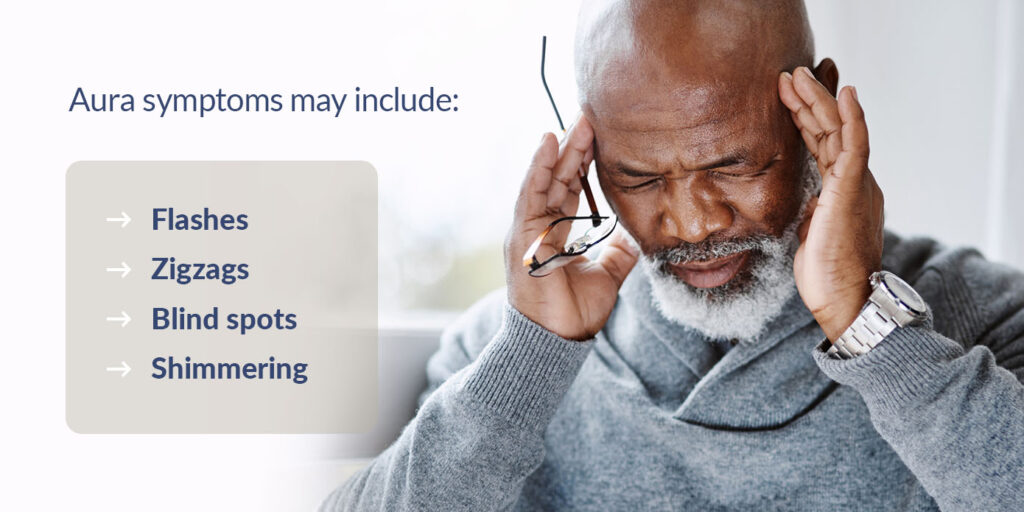
- Positive: Positive visual disturbances involve seeing something that isn’t really there — for example, you might notice shimmering zig-zag lines or flash bulb effects in your vision as you try to read.
- Negative: With negative symptoms, you might experience blind spots or tunnel vision. When reading, you might miss words on the page or see a blurry mass in place of text.
- Altered or distorted: If your vision is distorted or altered due to a migraine attack, it might feel like you’re looking at the page through water or a cracked glass.
Migraine can also come with cognitive symptoms like difficulty focusing and brain fog that make reading and retaining information challenging.
What to do if reading triggers migraine
If you are noticing new symptoms or migraine triggers, be sure to consult with your doctor. If you think reading is a trigger for your migraine, consider the following solutions to address your symptoms and help prevent an attack in the future:
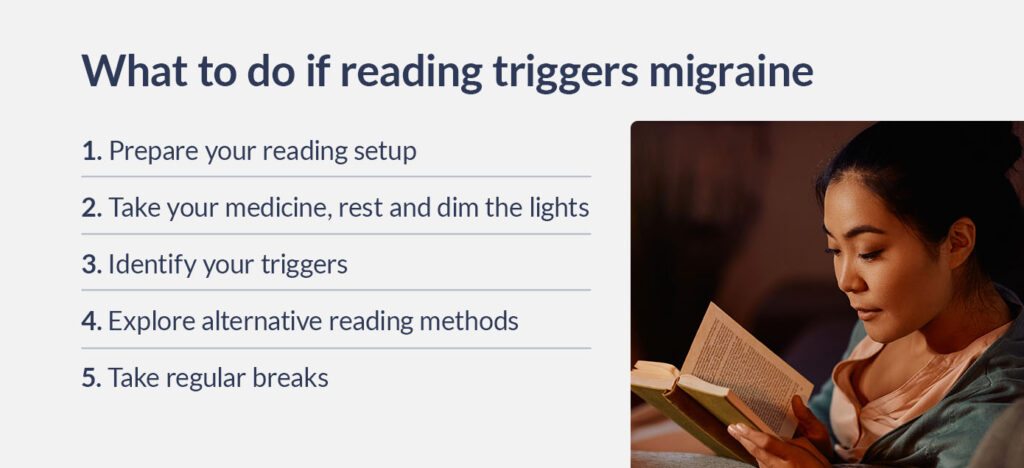
1. Prepare your reading setup
You may have to make some changes to your reading environment if it’s causing you to experience more migraine attacks. Dim lighting can make it hard to read the words, while a device with too-bright backlighting can strain your eyes. Make sure your light is bright enough that you don’t need to squint to strain, and try reducing your blue light intake with light-blocking glasses.
Make sure the room is not too warm and that it’s free of other potential triggers like overpowering smells. If you’re used to snuggling into bed with a good book in the evening but find your eyes tired from a full day of work, set time aside in the morning when your eyes are fresher.
If you read often, consider using the CEFALY device’s PREVENT mode during migraine-free periods to reduce the frequency of attacks.
2. Take your medicine, rest and dim the lights
When you feel the telltale signs of a migraine attack coming on, it’s a good idea to stop what you’re doing and rest in a quiet, dark space. Take any medication you’ve been prescribed, or use over-the-counter pain or nausea medication as needed. Have a full glass of water and eat a light snack if you can.
If visual stimuli are causing your migraine, it’s important to reduce sensory input and allow your brain to rest. You can lie down with your head slightly elevated in a dark room and try to sleep. An eye mask might help keep light away, and earplugs can be useful if you live on a busy street or in a noisy home.
3. Identify your triggers
One of the most important things to do when living with migraine is to identify and avoid your triggers. Common ones include:
- Stress and anxiety
- Hormones
- Dehydration
- Certain foods and beverages
- Nicotine
- External stimulants
- Lack of sleep
- Seasonal and atmospheric changes
If you find you experience migraine attacks after reading — whether with an e-reader, physical book or a computer — you can take steps to prevent an attack. Consider experimenting with different reading environments or lighting to see if one works better for you. You can even download an app for your smartphone, like CeCe Migraine Management, to track your triggers and note the frequency and symptoms of your attacks.

4. Explore alternative reading methods
While cozying up with a book might be your favorite way to enjoy your hobby, consider other ways you can enjoy reading. Alternative reading methods to help reduce migraine triggers include:
- Audiobooks: You can still indulge in the stories and books you love through audio. Try an audiobook subscription service, or check out the offerings from your public library.
- Large-font books: If straining to read the words on the page is what causes your migraine attacks, you can find books printed with large fonts that may be easier to read.
- E-reader fonts: Certain kinds of fonts may be easier to read than others, and many e-readers will allow you to adjust the font, size and spacing of the text to suit your comfort.
5. Take regular breaks
Like with staring at a screen, it’s always a good idea to take regular breaks to rest your eyes when reading for long periods. The popular rule, 20-20-20, can help — every 20 minutes, take a 20-second break to look at something 20 feet away. Long periods spent in one position can also take a toll on your body, so take this opportunity to adjust your posture.
Try CEFALY for migraine relief
CEFALY has developed an electronic device that is FDA-cleared and clinically proven to relieve migraine pain and reduce attack requency. By sending tiny electrical pulses to your trigeminal nerve, CEFALY not only relieves pain, but also eases other symptoms such as nausea and light sensitivity. In the largest study to date of CEFALY users, 57% reported relief from their most bothersome migraine symptom.
The two-pronged treatment approach of CEFALY Connected includes PREVENT, a daily 20-minute treatment to stave off attacks, and ACUTE, a 60-minute treatment for when you feel an attack coming on. Discover the benefits of CEFALY with a 90-day trial.




Latest Posts


“CEFALY Gave Me My Life Back”: Camille’s Search for a Drug-Free Migraine Treatment
Discouraged by her experience with medications, Camille began building a toolkit of non-pharmacologic migraine treatments. Find out what…

What Patients Need to Know About Episodic Migraine vs. Chronic Migraine
While official definitions classify episodic migraine as fewer than 15 headache days per month and chronic migraine as…