




An Occupational Therapist’s Guide to Managing Migraine and Chronic Illness (EDS, MCAS, and Dysautonomia)
Navigating chronic illness along with migraine disease is rarely straightforward. For many, the path to relief is filled with misdiagnoses, misunderstood symptoms, and a healthcare system that often overlooks the complexity of co-occurring conditions. For Kasey, a licensed occupational therapist, registered yoga teacher, and certified health and wellness coach specializing in migraine and chronic illness, this journey is both personal and professional.
Kasey lives with Ehlers-Danlos syndrome (EDS), mast cell activation syndrome (MCAS), and dysautonomia. After a long journey through diagnoses and trying various treatments, she began applying the lessons she learned to help other people who were struggling with similar conditions.
Kasey specializes in nervous system regulation and whole-person healing. Her work supports individuals living with chronic pain and systemic conditions through somatic movement, lifestyle tools, and neuro-informed education. In this interview, she shares her insights on managing these conditions, the importance of routine, and the role of CEFALY in migraine prevention and relief.
Managing migraine along with chronic conditions
Migraine is one of the most common co-occurring symptoms among patients with Ehlers-Danlos Syndrome (EDS), Mast Cell Activation Syndrome (MCAS), and dysautonomia.
Ehlers-Danlos Syndrome (EDS) is a group of genetic connective tissue disorders. Connective tissue is what holds everything together in your body — your joints, skin, blood vessels, and even internal organs. In people with EDS, this tissue is weaker than it should be, which can lead to symptoms like overly flexible (hypermobile) joints, stretchy or fragile skin, and chronic pain.
Mast cell activation syndrome (MCAS) is a condition where mast cells — immune cells that help your body respond to allergens and infections — become overactive. Instead of releasing chemicals like histamine only when needed, they go into overdrive, causing a wide range of symptoms. These can include hives, swelling, digestive issues, brain fog, and even anaphylaxis in severe cases. What makes MCAS tricky is that these reactions often happen without a clear trigger, making it hard to diagnose and manage. People with MCAS may react to things like stress, temperature changes, fragrances, or even foods they’ve tolerated before.
Dysautonomia is an umbrella term for disorders that affect the autonomic nervous system — the system that regulates functions like heart rate, blood pressure, digestion, and temperature — all of which can influence migraine attacks. When this system isn’t working properly, it can cause symptoms like dizziness, fainting, rapid heart rate, fatigue, and digestive problems. Dysautonomia can be mild or severe, and it often overlaps with conditions like EDS and MCAS.
One of the most common forms is POTS (Postural Orthostatic Tachycardia Syndrome), where standing up causes a dramatic increase in heart rate and a cascade of symptoms. Learn more about the link between migraine and POTS.
When patients have a combination of conditions along with migraine, that often leads to delayed diagnoses. Providers get overwhelmed, symptoms get siloed, and the root cause is missed. As a result, Kasey says, patients start to doubt themselves. They think: “I should be fine. I should be okay. Why do I have pain? This doesn’t make sense,” Kasey explains. “And so I talk a lot about validating your pain, validating yourself, understanding your body, understanding the signals that your body’s sending you.”



Why medication isn’t always the answer for patients with migraine and other chronic conditions
“A lot of people with EDS, dysautonomia, MCAS are very sensitive to medication,” Kasey says. “So finding the right medications that work for the patient is very challenging. Migraine medication, specifically, is very challenging because a lot of migraine medications can cause symptoms that make EDS, MCAS, and dysautonomia worse.”
Not only that, Kasey says, but medications for chronic illness can be costly: “A lot of my patients were doing things like injections that cost $4,000 every three months.”
When patients with chronic pain, chronic migraine, EDS, or MCAS feel overwhelmed by their symptoms, Kasey emphasizes building a prevention routine, one step at a time. “As a nervous system OT, what I do is create that toolkit, that strategy, that routine for the patient that allows them to have … a normal life or the life that they want to live.”
Depending on the patient, this “nervous system toolkit” might include:
- Hydration and electrolytes
- Rest and high-quality sleep
- Nutrition
- Exercise and stretching
- Compression devices
- Red light therapy mats
- Neuromodulation with CEFALY
- Stress management and nervous system regulation
The role of neuromodulation in migraine management
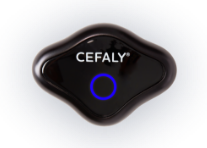
One tool Kasey frequently recommends is the CEFALY device, a drug-free neuromodulation treatment for migraine.
- CEFALY is accessible. “I always appreciate devices where it’s a one-time purchase and a long-term use,” she says. “Then it’s part of your routine for as long as you need.”
- CEFALY doesn’t require a prescription. “Let’s find tools that can help you feel good,” Kasey says, “whether or not a provider needs to prescribe them or not.”
- CEFALY prevents and relieves migraine. “What I love about CEFALY is that there’s two parts: There’s the prevention and the acute treatment,” Kasey says. So with a tool like CEFALY for my patients, we can work this into a daily routine that is going to help prevent migraines. And then we can also use it as a tool when we have an acute migraine attack.”
- CEFALY can go anywhere. It’s compact, portable, and easy to carry and use.
- CEFALY is a soothing routine. Having routines helps regulate the nervous system, Kasey says. “So bringing CEFALY into the routine, that’s regulating in and of itself. … That’s going to be quiet time. You’re going to be resting, you’re going to be lying down, which is really important for my patients.”
Curious about CEFALY? Try this clinically proven migraine treatment device risk-free for 90 days. Order now
A message of hope
Kasey’s story and her work offer hope to those living with chronic illness. “It’s all about managing,” she says. “Acceptance helps. Knowing what you’re dealing with and having tools to support you makes a huge difference.”
Her final reminder: “The diagnosis isn’t everything. Feeling good is everything.”
For more motivation and education, follow Kasey on Instagram @thenervoussystemOT or Tiktok @wellnesswithkasey.






Latest Posts

“CEFALY Gave Me My Life Back”: Camille’s Search for a Drug-Free Migraine Treatment
Discouraged by her experience with medications, Camille began building a toolkit of non-pharmacologic migraine treatments. Find out what…

What Patients Need to Know About Episodic Migraine vs. Chronic Migraine
While official definitions classify episodic migraine as fewer than 15 headache days per month and chronic migraine as…