




5 Things to Know About Neuromodulation for Migraine — with Dr. Michael A. L. Johnson
As a clinician working with patients who live with migraine, epilepsy, and neurological conditions, Dr. Michael A. L. Johnson has a deep interest in studying electrical interfaces within the nervous system and researching neuromodulation treatment of neurological conditions. Here, he answers some of the most common questions about neuromodulation for migraine and eTNS treatment with CEFALY.
1. What is neuromodulation in simple terms?
Neuromodulation is a term used to describe a field of science, technology, research, or medicine in which therapy or intervention changes the behavior of the nervous system (e.g. brain, spinal cord, peripheral nerves, muscles) or a medical condition affecting the nervous system.
When we talk about neuromodulation, we often think of technology, especially medical devices, which provide some form of stimulation or energy to improve or alleviate a disease affecting the brain or peripheral nerves. The field of applied neuromodulation has rapidly grown over the past several decades. Many forms of neuromodulation therapies are now standards of medical care for treating a variety of conditions from migraine, depression, epilepsy, movement disorders, and other forms of chronic pain.
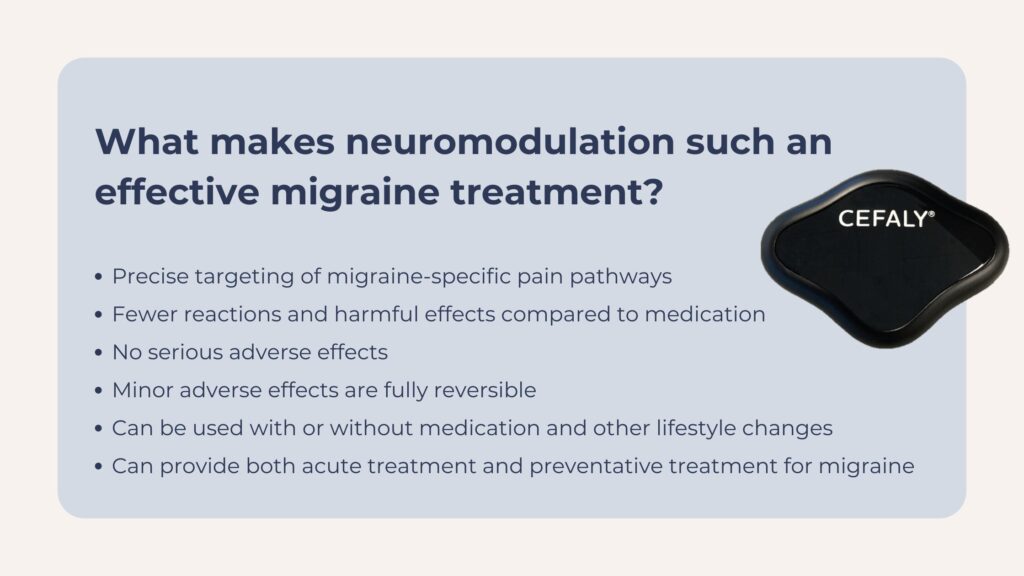
2. What makes neuromodulation such an effective migraine treatment?
Neuromodulation has several benefits that make it an effective treatment option for migraine. First, neuromodulation is a precision therapy that often targets the specific pain pathways implicated in migraine transmission and dysfunction. As such, it tends to have fewer reactions and harmful effects throughout the body relative to medication therapies.
Secondly, neuromodulation is a safe option for migraine. Most migraine neuromodulatory therapies are non-invasive (not implanted) and have no serious adverse effects. Even minor adverse effects associated with neuromodulation are fully reversible, typically with cessation of treatment.
Though migraine medications will remain an important option in migraine management, medications may not be effective for many people who suffer from migraine. In addition, pharmaceutical therapies have the potential risk of harmful side effects, potential drug-drug interactions, or simply not meeting the lifestyle preferences of people suffering from migraine. Survey studies of people living with migraine indicate that most people prefer non-medication options to alleviate or control migraine attacks.
Neuromodulation can be used with or without medication and other lifestyle changes. When designing a migraine treatment plan with your doctor, neuromodulation is a versatile option for people with busy and demanding schedules and responsibilities. Lastly, several forms of neuromodulation therapy provide both acute treatment and preventative treatment for migraine.
3. Why does CEFALY target the trigeminal nerve specifically?
CEFALY targets the trigeminal nerve because it is principally involved in abnormal function, resulting in migraine pain. By targeting the trigeminal nerve, CEFALY provides precision therapy by targeting migraine pain pathways to improve migraine pain and migraine-associated symptoms.
4. What are the top 3 things we’ve learned from CEFALY’s clinical studies?
- CEFALY is a safe and effective therapy to treat active migraines (acute therapy) and prevent migraines (preventative therapy).
- CEFALY is an effective therapy to alleviate migraine-associated symptoms such as sensitivity to light, sensitivity to sound.
- Prevention of migraine with CEFALY may reduce migraine medication use over three months.
5. Who can benefit the most from neuromodulation for migraine?
Neuromodulation is a very versatile option for the treatment of migraine. There are several forms of neuromodulation, and people suffering from migraines should consider trying these different options, even if one form of neuromodulation may not fit their needs.
In general, people should strongly consider neuromodulation therapies as options for migraine treatment if they:
- Prefer to address their migraine headaches with non-medication options
- Manage their migraine disease with medications but are looking for additional options in conjunction with their migraine medications
- Find that medications have not been effective, or have medication restrictions, sensitivities or allergies.
Of course, any treatment for migraine therapy should be individualized to your specific health history, preferences, and situation. Therefore, if you have questions about whether you can benefit from neuromodulation for the treatment of your migraine, you should discuss it with your physician, neurologist, or headache specialist.



Meet Michael A. L. Johnson, MD, CEFALY’s Medical Advisor
After receiving his medical degree from the Howard University College of Medicine, Dr. Johnson directly commissioned in the U.S. Army. He completed his neurology residency at Walter Reed National Military Medical Center, then became Chief of Neurology and Medical Specialties at Blanchfield Army Community Hospital at Fort Campbell, Kentucky.
Dr. Johnson conducts research and treats patients in his clinical neurology and epilepsy practice in Colorado. As Director of Medical Affairs for CEFALY, Dr. Johnson is involved with migraine education and product development, shaping and testing future versions of the CEFALY device.





Latest Posts


“CEFALY Gave Me My Life Back”: Camille’s Search for a Drug-Free Migraine Treatment
Discouraged by her experience with medications, Camille began building a toolkit of non-pharmacologic migraine treatments. Find out what…

What Patients Need to Know About Episodic Migraine vs. Chronic Migraine
While official definitions classify episodic migraine as fewer than 15 headache days per month and chronic migraine as…