




The Impact of Chronic Migraine Pain on Your Mental Health
A migraine attack can stop you in your tracks. You may have to leave work, stop what you’re doing and lie down in a cool, dark room until the attack subsides. People with chronic migraine experience some symptoms at least 15 days a month. Besides the physical challenges, chronic migraine can affect your lifestyle and relationships. Over time, it can have a big impact on your mental health.
The link between chronic migraine and mental health goes both ways. On the one hand, living with chronic migraine can affect your mental health. On the other, your mental health can be a migraine trigger. Careful management of both can improve your quality of life.
The link between migraine and mental health
Migraine and mental health have several links. They are both “invisible diseases.” They both have a stigma surrounding them, which may cause a lack of understanding. They can also worsen each other, creating a challenging spiral to overcome. Migraine and mental health conditions occur together often. This is referred to as comorbidity. Common migraine comorbidities include stress, depression and anxiety.
People with migraine are 3-6 times more likely to experience mood and anxiety disorders. They also report more acute depressive episodes during a migraine attack. These statistics create a clear link between migraine and depression. The causes for this connection are unknown, but several likely culprits exist. Chronic migraine can interfere with your daily life, leaving you isolated and frustrated. Over time, these challenges could trigger mental health conditions.
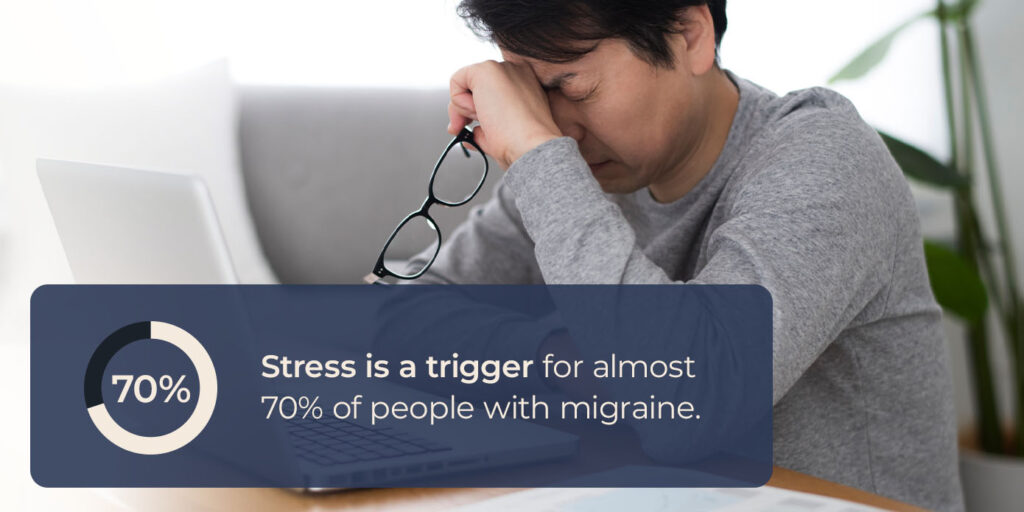
Anxiety is another common challenge. A massive 63.6% of people with migraine experience symptoms. In one survey, about 60% of individuals with migraine reported an anxiety disorder diagnosis. Stress, anxiety and migraine form a vicious cycle. Stress is a trigger for almost 70% of people with migraine. Many people with migraine also report feeling stress and anxiety about migraine attacks.
It remains unclear whether migraine causes mental health disorders or vice versa. However, 94% of healthcare providers believe mental health would improve with more effective migraine management.
How chronic migraine pain can affect mental health
Chronic migraine has severe effects on your quality of life. The uncertainty of migraine attacks can leave you constantly on edge. Debilitating migraine attacks makes it challenging to address your mental health.
People with migraine are 5.8 times more likely to develop depression. No proven causes of this relationship exist, but lifestyle changes are likely a contributor. Chronic migraine can affect your mental health in the following ways:
Try CEFALY to Prevent & Relieve Migraine Pain
Isolation and strained relationships
Regular migraine days can interfere with your relationships. You miss special events and lose time you could spend with your loved ones. Large functions and social gatherings have many migraine triggers. Over time, you can become isolated as you try to manage your migraine attacks. Feeling alone or inadequate in your social relationships can trigger depression symptoms.
Along with the physical symptoms, you may also experience irritability and difficulty sleeping. Those closest to you may bear the weight of these emotions. If they don’t understand your behavior, it could strain your relationships.
Lack of physical activity
Physical activity is a big part of many people’s lives. It releases endorphins, boosting your mental health and improving depressive symptoms. When you experience migraine, exercise itself can be a trigger. You may also find yourself unable to take part in even light exercise.
Over time, migraine can cause you to lose many of the physical activities you used to enjoy. Anxiety and depression can also limit your ability to mobilize, putting you in a passive loop.
Work stress
If migraine is debilitating in your personal life, they are as challenging at work. You may find you can’t keep up with the workload or need lots of time off. In severe cases, you may have to leave your job. The inability to achieve your career goals can lower your self-esteem. Feelings of worthlessness often lead to depression, anxiety and other mental health challenges.
Treatments for migraine impacting mental health
Managing migraine mental health concerns can be challenging. Everyone experiences these challenges differently. Discuss treatment options with your doctor to ensure they are safe for you.
Treating your migraine can often relieve some of your mental health concerns. You can also address both issues with various treatments, including:
- Antidepressant medication: Antidepressant and antianxiety medications can be effective for migraine and depression. Not all medications will have the same results. Discuss your options with your doctor to come up with the best treatment plan.
- Cognitive behavioral therapy (CBT): CBT gives you actionable steps to manage challenges. It also helps you change your thought patterns. With practice, you can identify and deal with depressive symptoms.
- Relaxation techniques: Visualization, deep breathing and meditation can help reduce anxiety and depression. These tools also help reduce stress, which can trigger migraine attacks.
Lifestyle changes can improve migraine and mental health
A holistic approach to migraine and mental health can have positive results. Drug-free alternatives, lifestyle changes and healthy habits can reduce migraine and mental health challenges. Consider the following steps to improve your quality of life:
- Drink plenty of water: Dehydration is a common migraine trigger. Keep water bottles around your home, car and workplace to remind you to hydrate.
- Build a migraine support network: Connect with people who understand migraine. Contact friends and loved ones for support. Connect online for helpful migraine management tips and support.
- Focus on your sleep: Lack of sleep is a known migraine trigger. It’s also a common mental health issue. Avoid caffeine and alcohol — which can also trigger migraine. Try to put a nighttime routine in place that works for you. Try meditation, warm baths and calming music before bed.
- Manage your work environment: You can ask for accommodations at work to relieve stress. Check if you can dim the lights, work in a quiet space and take breaks when needed.
- Build up to light exercise: Start small and stay within your comfort zone. Stick to low-impact options like yoga, swimming, and walking.
- Use CEFALY: CEFALY is an innovative, non-invasive and drug-free migraine treatment. The device targets the trigeminal nerve — the primary pathway for migraine pain. Daily 20-minute PREVENT sessions can reduce the frequency and intensity of migraine symptoms. You can also use a 60-minute ACUTE treatment when you first notice symptoms to reduce or eliminate migraine pain.
Learn How CEFALY Prevents & Relieves Migraine Pain
Try CEFALY for Drug-Free Migraine Relief Today
Balancing chronic migraine and mental health treatments can be a challenge. CEFALY provides clinically proven, drug-free migraine treatment and prevention. Our mission is to empower people to take control of their treatment. When you have control, you’ve taken the first step on your mental health journey. In one clinical study, 43% of CEFALY users reported resolution of all migraine symptoms.
Take the first step toward improved mental health and reduced migraine symptoms. Buy your CEFALY device online and experience the difference firsthand.





Latest Posts


“CEFALY Gave Me My Life Back”: Camille’s Search for a Drug-Free Migraine Treatment
Discouraged by her experience with medications, Camille began building a toolkit of non-pharmacologic migraine treatments. Find out what…

What Patients Need to Know About Episodic Migraine vs. Chronic Migraine
While official definitions classify episodic migraine as fewer than 15 headache days per month and chronic migraine as…