



The Connection Between Migraine and Mental Health
For people who experience migraine, daily life can be stressful and unpredictable. People with chronic migraine experience symptoms at least 15 days a month, preventing them from completing typical activities. Migraine attacks are often linked to mental health because they impact many aspects of life.
Understanding how your mental health affects migraine and vice versa can help you manage life better. By monitoring your symptoms and using stress management techniques, you can have better control over your well-being. Use this overview of migraine and mental health to discover the connection.
How can migraine affect your mental health?
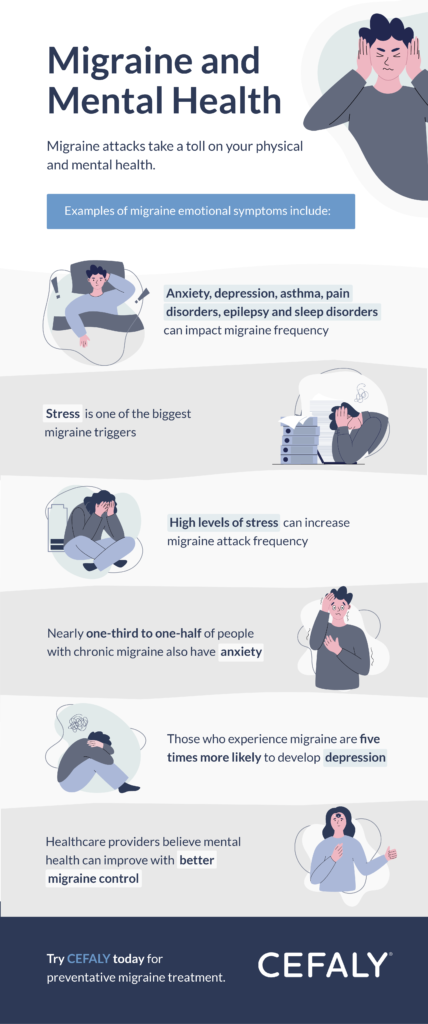
Migraine attacks take a toll on your physical and mental health. They’re draining and keep you from doing the things you love. Never knowing when your next migraine episode will occur makes daily life stressful. Overall, migraine attacks make life overwhelming, and this could lead to the development of anxiety, depression or other mental illnesses.
Here are other examples of migraine emotional symptoms:
- Stress: Migraine and stress create a continuous cycle. Stress is one of the biggest migraine triggers, often making attacks more frequent and more severe. But migraine can also cause stress when people live in fear of their next migraine attack.
- Anxiety: Anxiety is common for those who get migraine attacks. Nearly one-third to one-half of people with chronic migraine also have anxiety. Symptoms of anxiety include feeling tense, restless or weak. A lot of anxiety comes from feeling out of control. Because a migraine can cause you to lose control over your body, this creates feelings of nervousness.
- Depression: Those who experience migraine attacks are five times more likely to develop depression. A migraine can lead to days spent in bed instead of spending time with others, leading to feelings of sadness. You might feel fatigued or find less enjoyment in the activities you used to like doing because of migraine and depression.
When you have a migraine, your body is dealing with physical pain. The cells in your body that influence mood and pain relief are stimulated and impact your normal serotonin levels. Although medical professionals are not sure, they suspect that this change in serotonin levels can increase feelings of anxiety and depression after a migraine.
Can migraines be caused by stress?
Yes, stress can cause a migraine attack for many people. In fact, stress is a trigger for almost 70% of people who experience migraine. Significant life events, such as moving to a new home, or daily life stressors, like a strenuous work project, can cause a migraine attack. Once you start to endure migraine more frequently, you may feel more stressed about an attack. In this way, stress is both a cause and a symptom of migraine.
Sometimes people respond to stress by ignoring it or pretending everything is fine. However, stress always makes itself known in some way. If you don’t talk about it or take steps to reduce the stress you’re experiencing, your body will start to show the weight you are carrying. One expression of stress in your physical body can be a migraine attack.
There is also a correlation between post-traumatic stress disorder (PTSD) and migraine attacks. After experiencing trauma, people might find migraine pain secondary to PTSD. Those who experience migraine report almost two times as many trauma triggers as those without migraine.

Understanding the connection between stress and migraine
Because migraine creates stress and stress can cause a migraine attack, it’s tough to know which comes first. Regardless, healthcare providers believe that mental health can improve with better migraine management. By calming your body, you can start to calm down your thoughts and emotions.
Mental health symptoms can also impact migraine frequency. Migraine and stress can become a cycle, where either stress triggers a migraine or a migraine triggers stress. Once the cycle begins, it can be challenging to interrupt it and regain freedom from pain.
Although it can feel overwhelming, the connection between migraine and mental health can also be empowering. By improving your mental health, you may be able to reduce migraine triggers. Reducing migraine can also improve your quality of life by positively impacting your mood and internal dialogue.
Regardless of which symptom comes first, you can tackle the problem as a whole by addressing each part. Every time you take care of your physical body, you’re investing in a healthier mind. When you experience a migraine attack, you can nurture your mental health by being gentle with yourself until you feel better.




Stress management techniques
Focusing on stress reduction is a good way to manage your migraine mental health. Because it can play such a large role in migraine, lowering stress levels can help you navigate daily life more easily.
Here are some examples of stress management strategies you can implement in your daily life:
- Take regular breaks: When you’re dealing with a stressful task or experience, take time for breaks. Stopping for even 10 minutes gives your body and mind a way to relax. Whether you’re at work, powering through an exercise routine or navigating another stressful event, take time for yourself. Try eating a snack, stretching or taking a short walk during your break. The short time off might lower your stress levels and let you calm down.
- Exercise on a regular schedule. There’s a large body of research showing that regular physical activity can decrease the risk of migraine and improve mental health. Exercise is free, comes with a host of other benefits, like building confidence, and has no negative side effects, as long as you find a workout that doesn’t trigger attacks. You have nothing to lose and everything to gain by exercising more frequently!
- Spend 20 minutes a day doing something you enjoy: Sometimes, migraine or low mood can distract you from the hobbies you love. These activities are crucial for your overall happiness, so it’s essential to make time for them. Try blocking out 20 minutes of each day and dedicate it just to what gives you joy. Whether it’s watching your favorite TV show, making your favorite food or anything in between, carve out time for it every day.
- Realize that it’s OK to say “no”: Being overworked or overbooked is a big stressor for many people. If you feel like you don’t have any time to yourself or to complete important tasks, it might be time to turn down some of your obligations. Remember that you can’t be everywhere at once and you can’t help others without taking proper care of yourself. Saying “no” to a few invitations so you have more time to yourself might help lower stress.
- Try meditation: Meditation is a popular strategy for relieving anxious thoughts. There are many different types of meditation, from breathing exercises to yoga exercises. The practice centers on mindfulness by allowing yourself to focus completely on your breath. Meditating for just five or 10 minutes a day can help you reduce stress levels and potentially migraine frequency.
- Follow a healthy diet: Another way to help with stress is following a healthy diet. The food you consume affects how you feel, so it’s important to fuel your body with healthful foods. Sticking to a healthy diet can help prevent migraine. Try adding fruits or vegetables at every meal, and make sure to eat from all food groups. It’s more than OK to have a treat every so often, but try to focus on filling the majority of your diet with whole foods.
- Participate in a support group: Support groups allow you to receive encouragement and support from others with similar struggles. Many support groups across the country center around living with migraine or anxiety. If you’ve never tried a support group before, it might help with migraine and other stressors. You can meet people who share your struggles and learn more about how others manage migraine and stress.
- Plan your day and keep a regular schedule: Migraine is often triggered by surprises or sudden changes. It could be a change in the weather, a sudden difference in diet or an alteration in your sleeping patterns. That’s why keeping a consistent daily plan is helpful. Try to maintain consistent sleeping patterns and eat similar foods. If you notice a migraine attack occurs after you eat a particular food or sleep differently, try to avoid those habits in the future.
- Incorporate CEFALY into your daily routine: CEFALY is an FDA-cleared device that both prevents and relieves migraine. With a daily, 20-minute CEFALY treatment, you can decrease the frequency of migraine attacks.
- Be kind to yourself. It is important to be patient with yourself when you’re recovering from pain, whether that’s physical, emotional or mental. Kindness and rest are key to calming down your body and brain. You may not be able to control migraine, but you can control how you treat yourself before, during and after the attack.
Use these tips to manage stress and its impact on migraine. Think of yourself as a child you’re taking care of. You deserve quality care, whether you’re experiencing migraine aura, migraine or post-migraine symptoms. What do you need next? Following healthy habits each day may help to reduce migraine symptoms, allowing you to enjoy your life with less anxiety.
Learn How CEFALY Prevents & Relieves Migraine Pain
Discover CEFALY: A preventive migraine device
Since 2008, CEFALY has helped people with migraine relieve their symptoms, reduce attack frequency, and get back to life. Our treatment device stimulates the trigeminal nerve, which is the primary pathway for migraine pain. CEFALY is a trusted migraine treatment method, cleared by the FDA and recommended by leading healthcare professionals. You can boost your mental health by enjoying more days without migraine.
Learn more about CEFALY today and try it for 90 days, risk free!






Latest Posts


“CEFALY Gave Me My Life Back”: Camille’s Search for a Drug-Free Migraine Treatment
Discouraged by her experience with medications, Camille began building a toolkit of non-pharmacologic migraine treatments. Find out what…

What Patients Need to Know About Episodic Migraine vs. Chronic Migraine
While official definitions classify episodic migraine as fewer than 15 headache days per month and chronic migraine as…