



How Menstruation Affects Women’s Health
Menstruation can impact your physical and emotional well-being, making it important to practice self-care and be aware of your symptoms as they fluctuate. Your menstrual cycle can also trigger migraine attacks, known as menstrual migraine. Read on to learn more about the effects of menstruation on the body and how CEFALY can help with menstrual migraine.
The impact of menstruation on your health
Menstruation affects many aspects of your health due to fluctuations in hormones. It’s also an indication of overall health, as irregular cycles might signal a larger problem. Here is a closer look at how menstruation impacts different areas of health:
Emotional and mental health
Dealing with menstrual pain and symptoms can impact your mental health and emotions. As ovulation starts, the brain chemical serotonin drops, which can cause feelings of sadness or depression.
More than 90% of women experience premenstrual syndrome (PMS) in the weeks leading up to their menstrual cycle. PMS has a wide range of symptoms that vary in intensity, and they often affect your emotional health. Common PMS symptoms include:
- Anxious feelings
- Feelings of sadness or depression
- Crying
- Irritability or anger
- Strong food cravings
- Poor concentration
These effects of menstruation on mood can disrupt your life during your cycle. You might experience a similar pattern of symptoms before each cycle, or they might change each month. Symptoms could be so severe you need to miss school or work, or they could be manageable in daily life.
Physical health
Your menstrual cycle and PMS also cause physical symptoms. You might experience signs like:
- Menstrual cramps: Many women get menstrual cramps before or during their period. These are sharp or throbbing pains in your abdomen, but they may also be present in other parts of the body. Cramps can appear as dull, continuous aches that persist for hours at a time.
- Bloating: Another common effect of menstruation on the body is bloating. Your stomach or other areas might feel tight before or during your cycle.
- Breast tenderness: Your breasts might feel sore or tender during your menstrual cycle. Depending on the severity, it might become difficult to wear tight-fitting bras or shirts during this time.
- Acne: Some might experience increased acne breakouts on their face or other body areas before their menstrual cycle.
- Fatigue: It’s common to feel extremely tired or have low energy during your period.
- Insomnia: Your cycle might disrupt regular sleep cycles, making it harder to fall or stay asleep.
Regular menstrual cycles indicate your body is healthy enough to become pregnant and sustain fertilization. Tracking your period helps you make informed health decisions and plan for upcoming events.




Effects on other health conditions
Your period can also affect existing health conditions or cause other problems. For instance, it might worsen current symptoms of current conditions like:
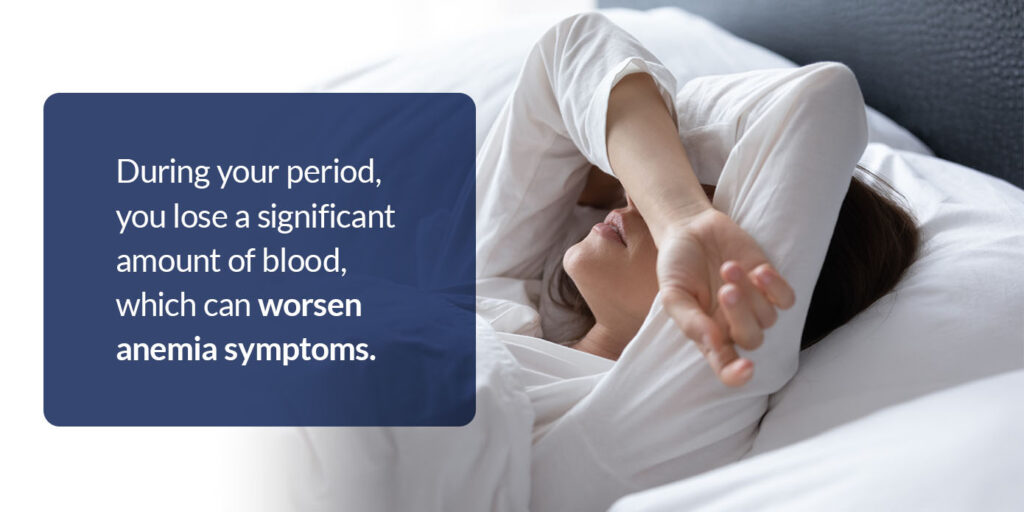
- Anemia: Anemia is a condition in which your body doesn’t make enough red blood cells. This can lead to iron deficiency, causing feelings of fatigue. During your period, you lose a significant amount of blood, which can worsen anemia symptoms. Your period can also cause anemia to develop.
- Mood disorders: If you already have a mood disorder or depression, these symptoms can get worse during your menstrual cycle. PMS might make feelings of sadness more intense.
- Diabetes: Irregular menstrual cycles put women at higher risk for type 2 diabetes. If you already have diabetes, your period can make symptom management more difficult.
- Osteoporosis: Osteoporosis causes your bones to wear down, becoming weak and brittle. Decreases in the hormone estrogen can cause osteoporosis, putting women in menstrual cycles more at risk.
Breaking down the menstrual cycle
Your menstrual cycle follows four stages — the menstrual, follicular, ovulation and luteal phases. Each stage is essential and can affect your physical and mental health differently. Learning more about each stage can help you understand the importance of menstrual cycles.
1. The menstrual phase
During the menstrual phase, women experience their periods. Your uterus sheds its lining, leading vaginal bleeding. This phase typically lasts between three and seven days, with the duration often varying between months. You can use a variety of hygiene products to manage your blood flow, such as:
- Pads
- Tampons
- Period underwear
- Menstrual cups
You might also experience other physical and emotional symptoms during your period, such as bloating or mood swings.
2. The follicular phase
The follicular phase occurs from around the sixth day of your period and lasts about 10 to 14 days. This stage involves an increase in the hormone estrogen. As it rises, your uterus lining becomes thicker in anticipation of a possible pregnancy. In addition, your pituitary gland in the brain stimulates follicle production in your ovaries. One of these follicles could mature into an egg.
The follicular phase is known for being a happier time of the month. You might have higher energy levels and experience more positive moods during this stage.
3. The ovulation phase
Ovulation happens at about the halfway point of your cycle, which is usually day 14. Levels of luteinizing hormone increase, causing a mature egg to move from your ovaries into the fallopian tubes. Ovulation usually lasts between 16 and 32 hours. Women are most likely to get pregnant in the three days leading up to this phase and when ovulation occurs. If sperm makes contact with the released egg during this time, pregnancy is possible.
4. The luteal phase
After ovulation, the egg travels to your uterus. The hormone progesterone rises to prepare your body for pregnancy. If your egg becomes fertilized by sperm and attaches to your uterine wall, you become pregnant. If not, your uterus begins the process of shedding its thick lining, starting the cycle over. The luteal phase might make you feel moodier or start symptoms of PMS.
Menstrual migraine
For many women, their monthly period is a sign of oncoming migraine attacks. During your period, you experience many hormonal changes, such as drops in estrogen. These fluctuations are often linked to migraine. Menstruation can be a trigger for a series of attacks known as menstrual migraine. Some women only experience migraine during their menstrual cycle.
The best way to tell whether you have menstrual migraine is to track your migraine attacks. You can log when they occur each month and see if their frequency aligns with your periods. If you commonly get migraine attacks on the days you menstruate, you likely have menstrual migraine.
Menstrual migraine is usually more severe and lasts longer than other migraine types. This type of migraine might also resist regular treatment. Some medications and treatment devices, like CEFALY, can help you manage migraine attacks during menstruation.
Learn More About Menstrual Migraine
Relieve menstrual migraine with CEFALY
If you’re seeking relief from menstrual migraine, it’s time to try CEFALY. Our FDA-approved treatment device can reduce migraine frequency and alleviate pain during attacks. It stimulates and desensitizes your trigeminal nerve, the primary pathway for migraine pain, so you can manage your migraine symptoms without relying on prescription medication.
To get started with CEFALY, shop online today.




Latest Posts

“CEFALY Gave Me My Life Back”: Camille’s Search for a Drug-Free Migraine Treatment
Discouraged by her experience with medications, Camille began building a toolkit of non-pharmacologic migraine treatments. Find out what…
What Patients Need to Know About Episodic Migraine vs. Chronic Migraine
While official definitions classify episodic migraine as fewer than 15 headache days per month and chronic migraine as…