




Mastering the Art of Practicing Mindfulness With Chronic Migraine Pain
Chronic pain affects your quality of life, relationships and mental and physical health. Additionally, you can experience independence and mobility challenges that impact your ability to work. Mindfulness-based practices are techniques for managing your migraine attacks and chronic pain. They involve creating a non-reactive awareness of the present, leaning into coping and pain relief strategies.
Mastering the art of mindfulness in pain management starts with understanding its role in migraine pain. There are also various techniques to explore to find the best fit for your lifestyle.
Understanding the role of mindfulness in migraine pain management
Chronic and high-impact chronic pain affect over 68 million Americans every day. Mindfulness can play a remarkable role in managing this chronic pain. Constant anticipation of another migraine attack can impact your mood and even increase pain levels. Using mindfulness techniques, you can channel your thoughts away from negative emotions and fears about your experiences.
The science behind mindfulness and pain perception
Practicing mindfulness can trigger changes in your brain’s insula and anterior cingulate cortex (ACC) — the areas of the brain that are responsible for pain and emotional regulation. Chronic pain often raises your stress levels, which is a trigger for 70% of migraine sufferers and adds to the pain cycle. Mindfulness-based techniques can alleviate both the severity of pain and the stress of anticipation.
Mindfulness may even be able to impact your brain’s ability to process pain signals, lowering your perception of discomfort. If you practice this regularly, you will notice some neuroplastic changes in your brain over time. These changes to neural pathways and synaptic connections can rewire your brain’s pain response, giving you more control over your body’s reactions to a migraine attack.
The role of mindfulness in chronic pain management
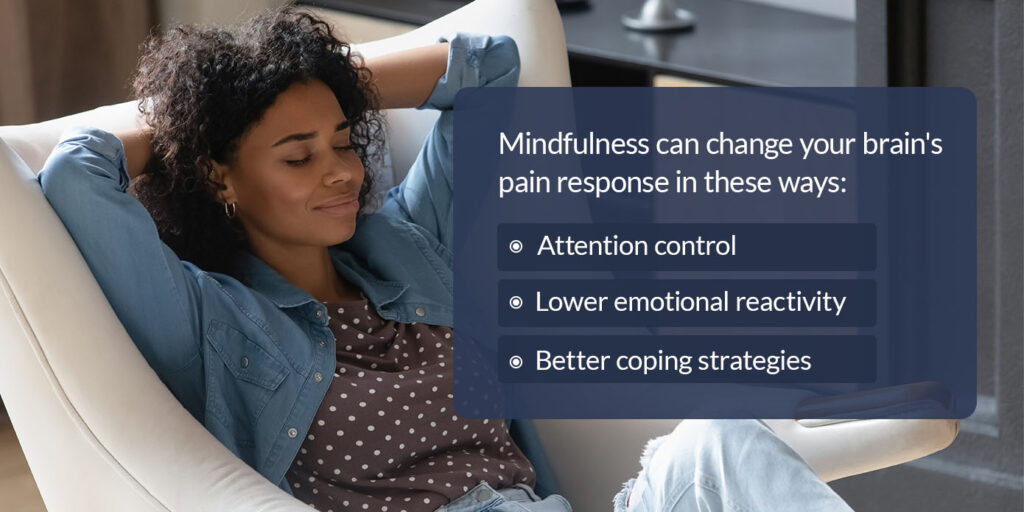
Mindfulness can help to alter your subjective pain experience. It empowers you to take on a proactive, non-pharmacological role in pain management. Mindfulness can change your brain’s pain response in these ways:
-
- Lower emotional reactivity: As emotional distress is linked to physical discomfort, practicing mindfulness can help to regulate your emotional pain response.
-
- Better coping strategies: Focusing on the present can help you better navigate pain episodes and triggers.



Exploring mindfulness techniques for chronic migraine sufferers
Integrating mindfulness into your migraine treatment plan gives you a holistic approach to coping with your chronic pain. Here are a few ways to practice mindfulness with chronic pain.
Try CEFALY to Prevent & Relieve Migraine Pain
Meditation and migraine prevention
Mindful meditation for chronic pain lets you focus on breathing, your body sensations or a focal point of your choosing. Your goals are to refocus your thoughts and to eliminate negative thoughts. This may help to lower your stress levels and tension in your body.
Start by lying down or sitting in a cozy, quiet space. Keep your body relaxed but alert and focus on your breathing. Observe your thoughts and bodily sensations in a calm, neutral way. You can use guided meditation techniques from books or listening apps for stress reduction and relaxation. For meditation to be an effective preventative strategy, you must stay consistent — try to meditate for a few minutes every day. Many people meditate in the mornings or evenings to get a good start to their day or help them relax at the end of one.
Other mindfulness techniques for migraine pain management
If meditation is not appealing, there are various other chronic pain mindfulness-based stress reduction (MBSR) techniques you can consider. Complementary stress and pain management programs range from yoga to cognitive exercises and more. Here are a few additional methods to help manage your response to migraine attacks and their symptoms:
-
- Body scan: With this technique, you focus your attention on different parts of your body. It promotes relaxation as you calmly identify areas of discomfort or tension without concentrating on the feeling.
-
- Cognitive behavioral therapy (CBT): CBT works by altering your thought patterns and behaviors. In some, this type of therapy can help patients deal with chronic pain, and may help you change the way you react to migraine symptoms.
-
- Yoga: You can reduce stress and tension by improving your blood circulation and flexibility. This change can decrease your migraine triggers or intensity of migraine attacks.
-
- Breath awareness: Focus on inhaling and exhaling, noticing the tempo of your breathing. Try to get a steady, even cadence, calming your nervous system.
-
- Grounding: Connect with the earth by going barefoot and walking outside. The best time to do this is in the morning, with fresh dew on the grass. Alternatively, swim in a lake or the ocean or use grounding equipment.

Pain management strategies: Combining mindfulness and CEFALY for migraine relief
When you suffer from frequent migraine attacks, you have a hypersensitive nervous system. This means that your body tends to overreact to stimuli, which leads to pain and neurological dysfunction. The trigeminal nerve in your head and face is the conductor of this migraine pain. Stimulating this nerve can desensitize it over time.
The benefits of CEFALY for migraine treatment and prevention
CEFALY is a migraine pain treatment that helps reduce migraine frequency with consistent use. It transmits mild electrical currents through an adhesive electrode on your forehead. The ACUTE program relieves pain at the first sign of a migraine attack. Use the PREVENT program daily to help prevent migraine attacks.
In one study, 79% of patients saw a significant reduction in headache pain after one hour of CEFALY ACUTE treatment.
Embracing mindfulness for a migraine-free life
When traditional pain-relieving methods stop working, you need to look into alternative options. Combining mindfulness techniques for chronic pain with your migraine pain management plan can help you build resilience. Through consistent practice, you can lower your stress levels, enhance your emotional regulation and boost your quality of life. As you master MBSR techniques, you can reclaim control over your pain management and better navigate the challenges of chronic migraine.
The first migraine device of its kind, CEFALY has treated 2 billion migraine attacks. Add CEFALY to your pain management strategy for safe and effective drug-free migraine relief. Order your device risk-free, thanks to our 90-day money-back guarantee.





Latest Posts


“CEFALY Gave Me My Life Back”: Camille’s Search for a Drug-Free Migraine Treatment
Discouraged by her experience with medications, Camille began building a toolkit of non-pharmacologic migraine treatments. Find out what…

What Patients Need to Know About Episodic Migraine vs. Chronic Migraine
While official definitions classify episodic migraine as fewer than 15 headache days per month and chronic migraine as…