




Medical Marijuana and Migraine
Migraine pain management is rarely simple. Migraine attacks may induce severe symptoms — so much so that people with migraine cannot complete their daily tasks or participate in regular activities. So, what if prescription or over-the-counter (OTC) pharmaceuticals don’t work? What else can you try?
Many opt for medical marijuana for migraine pain management. Although its pharmaceutical use dates back many centuries, how concrete is the evidence today? How do the plant’s cannabidiol (CBD) and tetrahydrocannabinol (THC) interact with the body? Aren’t there health and legality risks? There are many questions about the weed and migraine relationship, and we’re here to answer them.
The relationship between the mind, body and marijuana
Our endocannabinoid systems (ECS) contain cannabinoid receptors, which are a network of CB1 and CB2 molecules. This communication system handles many important functions throughout the body.
These CB1 receptors are found in the central nervous system (CNS) and can affect how we feel pain. It’s thought that marijuana can help treat or manage various conditions by acting on our ECS. Why? Because weed has natural compounds known as cannabinoids.
The plant can produce over 100 cannabinoids, but the most well-known are THC and CBD. These regulate how our cells communicate and have psychoactive and anti-psychoactive effects.
When cannabinoids enter the body, they locate the body’s cannabinoid receptors. The cannabinoids change how the cannabinoid receptors work, which may lead to a calming effect and reduced pain signals. This process may help with other health issues, like anxiety, nausea or muscle spasms.
We know that marijuana can sometimes help with pain and other conditions because of its effects on the body. But what do studies specifically say about migraine and weed use?




What do studies say about marijuana migraine treatment?
During a migraine attack, overexcited nerve cells trigger chemicals in your brain. These chemicals narrow blood vessels and cause intense feelings of pain. Because marijuana has pain-relieving properties, many health professionals have studied its effects during migraine attacks.
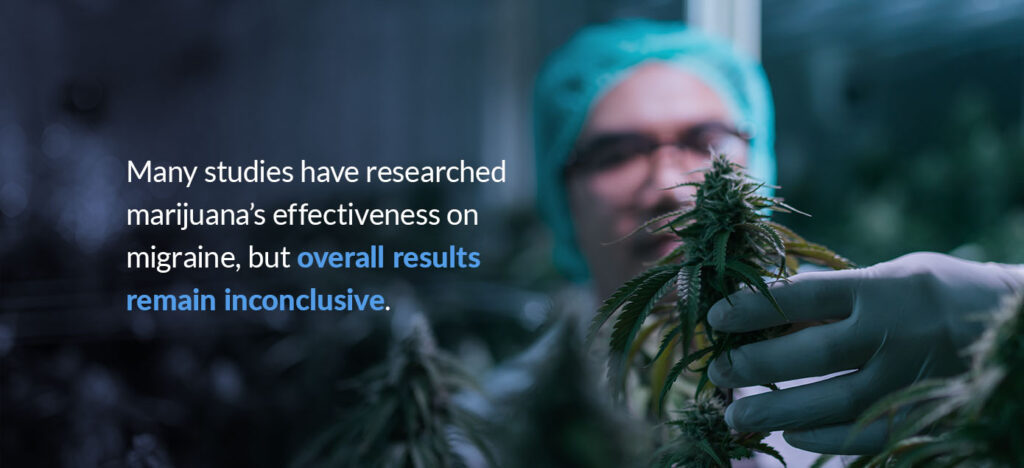
Many studies have researched marijuana’s effectiveness on migraine, but overall results remain inconclusive.
Some tests show promising results, such as one from 2022. That study showed that cannabis consumption significantly reduced nausea and vomiting during migraine attacks. It also reduced migraine frequency.
Another 2024 study found promising results regarding the relationship between cannabinoids and the body’s immune cells. The immune system is essential in defending the body, but it also involves neurological conditions, like migraine. That said, the study pointed out that while cannabinoids have potential as a migraine treatment because of how they interact with the immune and nervous systems, there’s still a lot we don’t know. It’s an area that needs much more research to really understand how effective they could be and how they work.
An extensive review of 34 studies on medical marijuana and migraine found both beneficial long-term and short-term effects: ”It was effective in decreasing daily analgesic intake, dependence, and level of pain intensity. Some patients experienced a prolonged and persistent improvement in their health and well-being (both physically and mentally) after long-term use of medicinal cannabis.” However, the study noted, some healthcare professionals are hesitant to recommend medical marijuana due to the lack of or mixed results in conjunction with other factors.
Additionally, marijuana migraine management usage has a few challenges, such as:
- Unpredictable responses: Cannabis can affect people differently. For instance, it relaxes some people while making others paranoid or anxious. Similarly, it can have pain-relieving effects for some while having little impact on others.
- Difficulties with access: Researchers often face challenges when accessing marijuana for their studies due to restrictive laws in the United States.
Overall, cannabis for migraine shows promise as a treatment. An increase in legality — in the U.S. and worldwide — and more research will allow medical professionals to reach more conclusive answers.
Learn How CEFALY Prevents & Relieves Migraine Pain
What cannabis strains are best for migraine?
There are three types of cannabis — Indica, Sativa and hybrid. Between them, there are over 700 cannabis strains or varieties available with different effects. Some strains that may help include:
- ACDC: ACDC is a CBD-dominant strain that may offer relief from pain and anxiety.
- Harlequin: This strain is high in CBD and low in THC. It may help reduce pain without intense psychoactive effects.
- Northern Lights: An Indica classic, this strain could help tackle pain and promote restful sleep.
- Purple Kush: A potent Indica strain, this Kush variant may provide deep relaxation and can help with insomnia.
Always consult with a healthcare professional before using marijuana for migraine management.

What are the risks and side effects of marijuana use?
Marijuana’s effectiveness can vary by person. While it produces benefits for some, it can negatively impact others. Users also have to be careful of developing a dependence on the drug or overusing it.
Depending on how it affects you personally, cannabis can have negative side effects like:
- Dizziness and nausea: Many users consume cannabis to alleviate nausea during a migraine, but it can have the opposite effect for some people. Marijuana can cause you to feel disoriented, bringing on intense feelings of dizziness. The room might appear to spin or go out of focus.
- Paranoia: Another common side effect of cannabis is paranoia. Certain dosages might make you feel hypervigilant or as though people or objects are threatening. It can heighten fearful feelings and make your environment seem scarier than it actually is.
- Mood changes: After extended marijuana use, you might experience mood changes. For instance, it can slow your reaction times and make you feel completely relaxed. Or you might feel irritable or angry after not using it for an extended period.
- Negative impacts on lungs: You can ingest medical marijuana in various forms, including edibles and smoking. If you smoke, it can have the same harmful effects on your lungs as smoking tobacco. It could harm lung tissue or damage blood vessels.
- Addictive qualities: While many argue you cannot become addicted to marijuana, many people become dependent on the drug and show withdrawal symptoms when they do not consume it. For example, you might feel depressed, restless or angry. You might also display physical symptoms like excessive sweating or shaking.
- Impacts on brain development: Studies have shown that marijuana can negatively impact brain development. The drug affects brain processes for memory and maintaining attention. However, long-term effects depend on your average use levels, the amount you use and other genetic and environmental factors.

In addition, certain preexisting symptoms or conditions make it unsafe to use medical marijuana, including:
- Pregnancy
- Lung conditions or irritation
- Heart disease
One drug-free alternative is CEFALY, a noninvasive option that is clinically proven to help manage migraine.
Can smoking marijuana make migraine worse?
Yes, smoking marijuana can sometimes make migraine worse for certain individuals. Inhaling cannabis may trigger migraine due to smoke irritation or sensitivity to specific strains.
Also, overusing cannabis could lead to “rebound headaches” or Cannabinoid Hyperemesis Syndrome (CHS) — especially with prolonged use. In a sense, it’s a cannabis migraine due to its potential overuse, strain sensitivity or withdrawal effects.
If smoking doesn’t suit you, there are alternative delivery methods to consider, like:
- Capsules or pills
- Edibles
- Oils
- Oro-mucosal sprays
- Tinctures
- Topicals
Consult with your healthcare provider to find the safest and most effective method for your migraine management.
Legality concerns
Federal and state laws limit medical marijuana usage. These laws restrict some individuals with migraine from using the drug for relief. Although the majority of states allow medicinal cannabis, it’s not yet completely legal. Your healthcare provider must draft a written statement explaining your condition and symptoms to obtain medical marijuana.
Additionally, many states require you to have a certain condition before you can get approved. These conditions often vary by state. For instance, accepted conditions include:
- Cancer
- HIV/AIDS
- Epilepsy
- Severe chronic pain
- Severe nausea
Looking to the future
While medical weed has shown promising results for migraine management, medical professionals need to conduct more studies to completely understand its effects. Marijuana legalization laws restrict researchers from overseeing thorough tests, such as trying different dosages or studying side effects.
However, marijuana laws continue to change as voters and government officials reconsider its impacts. As legislation adjusts, scientists will likely complete more thorough research on migraine marijuana treatments.
In the meantime, those with migraine can find relief in alternative treatments, such as the CEFALY Connected device for migraine relief. This FDA-cleared treatment can help lower migraine attack frequency and reduce pain during an attack.
Seeking migraine relief? Experience CEFALY
If you’re seeking an alternative treatment for migraine pain, try CEFALY. Our treatment devices are prescription- and drug-free. CEFALY targets your trigeminal nerve, the major pathway for pain during a migraine attack. Over time, it desensitizes the nerve until you experience fewer migraine attacks.
To get started with CEFALY, shop online today.





Latest Posts


“CEFALY Gave Me My Life Back”: Camille’s Search for a Drug-Free Migraine Treatment
Discouraged by her experience with medications, Camille began building a toolkit of non-pharmacologic migraine treatments. Find out what…

What Patients Need to Know About Episodic Migraine vs. Chronic Migraine
While official definitions classify episodic migraine as fewer than 15 headache days per month and chronic migraine as…