




Can the Emergency Room Help With Migraine?
The emergency room can help with migraine attacks, especially if they are severe, unmanageable with over-the-counter (OTC) medications, or if they are accompanied by alarming symptoms you’re not used to. As someone living with migraine, you’re familiar with your own symptoms. But sometimes, you’re caught in the struggle of deciding whether your symptoms are severe enough to warrant a trip to the emergency room (ER).
Depending on the migraine, emergency room procedures may include providing stronger medications and performing tests to rule out other serious conditions. Learn when you should seek emergency care, what you can expect from emergency room migraine treatments and what to do after your visit to the ER.
When should you go to the emergency room for migraine?
Headaches — which include tension headaches, migraine, and neurological issues — make up around 2.8% of ER visits in the U.S., or nearly 3 million visits per year.
The following signs and symptoms warrant an ER visit:
- A sudden and severe headache: Typical migraine headaches are usually preceded by the prodrome phase. If you experience a sudden “thunderclap” headache that comes on without warning, peaks within a minute and feels like the “worst headache of your life,” you should visit the ER right away. This could be a sign of a serious medical condition.
- New or unusual symptoms: If your headache feels more severe or different from your usual migraine headache, emergency room treatment may be necessary.
- An unstoppable migraine: A migraine attack typically lasts between 4 and 72 hours. If yours has lasted more than 72 hours without relief from your usual treatments, it may have turned into status migrainosus, which requires emergency treatment.
- A headache accompanied by other signs: A headache that started after a head injury needs an ER visit. Other signs to look for include a fever, stiff neck, severe dizziness, loss of consciousness, breathing issues or inability to drink fluids due to vomiting.
- Neurological symptoms: Weakness or numbness on one side of your body, confusion, memory loss, trouble speaking, loss of balance or coordination, seizures and vision changes not related to typical migraine aura could indicate more serious conditions and need immediate medical attention.




What will the emergency room do for a migraine?
When you visit the ER for migraine, the medical team will focus on evaluating your condition, ruling out other serious issues and providing relief. Here’s what you can expect:
1. Evaluation
The medical team will ask detailed questions about your migraine, such as:
- When did the symptoms start?
- How long have you been feeling the symptoms?
- How would you describe your headache?
- Do you feel any other symptoms, like nausea or vomiting?
They will also ask you about your medical history, including any previous migraine treatments and their effectiveness. To ensure your symptoms are consistent with migraine and not a more serious condition, they may also check your reflexes, muscle strength, coordination and balance to identify any neurological abnormalities.
2. Tests
The doctor may order a CT scan or MRI to provide detailed images of your brain and help rule out conditions like stroke, aneurysm and brain hemorrhage. They may also do blood tests to help detect signs of infection, inflammation or electrolyte imbalances. Sometimes, the medical team will perform a lumbar puncture or spinal tap to analyze the cerebrospinal fluid for signs of infection or bleeding.
3. Relief
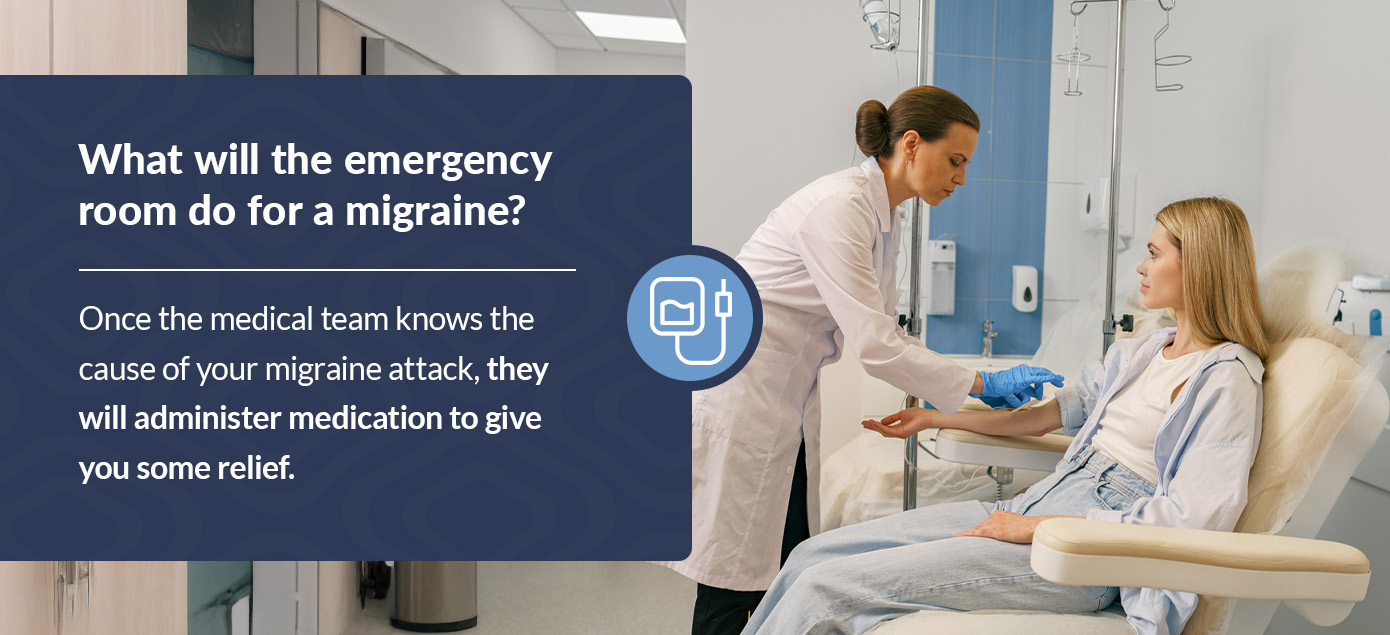
Once the medical team knows the cause of your symptoms and has determined that it’s a migraine attack, they will administer medication to give you some relief from the pain. These are a few examples of what the ER can do for a migraine to make you feel better:
- IV fluids: Dehydration can exacerbate migraine symptoms, so intravenous (IV) fluids help to rehydrate the body and alleviate symptoms.
- Pain relievers: Nonsteroidal anti-inflammatory drugs (NSAIDs) like ketorolac — Toradol — are often used to reduce inflammation and pain. Your doctor may also administer acetaminophen for pain relief.
- Antinausea medications: Medications like metoclopramide or ondansetron help to control nausea and vomiting.
- Other medications: Triptans, ergot alkaloids or corticosteroids may be included in the treatment to help break the migraine cycle and provide relief.
- Nerve block: In cases of severe pain, the medical team may give you a nerve block. This involves injecting a numbing medication into specific areas to block pain signals temporarily.
ER doctors generally avoid using opioids in migraine treatments because they’re less effective and can lead to dependency and repeat ER visits.
How to advocate for your care in the ER
Advocating for your care in the emergency room is crucial, especially during a migraine attack. Here are some strategies to ensure you receive the best possible care:
- Come prepared: Bring a formal migraine action plan (MAP) that outlines your diagnosis, typical symptoms, triggers, treatment history and medications to avoid. This document helps the medical team understand your specific needs and history. Share a list of all medications you currently take, including dosages and any known allergies.
- Be specific about your symptoms and needs: Explain the symptoms you’re experiencing, including any new or worsening effects. Be as specific as you can about the severity and nature of your pain. Inform the medical staff about your known triggers and treatments that have or haven’t worked for you in the past.
- Ask questions and speak up: Ask questions about the proposed treatments and their potential side effects. Understanding your care plan empowers you to make informed decisions. If you have concerns about a particular treatment, speak up.
- Bring a support person: Having someone with you can be invaluable. They can help communicate your needs, provide emotional support and ensure your MAP is presented to the medical team, especially when you’re unable to talk.
What to do after a visit to the ER
When you’re discharged, it’s essential to focus on long-term prevention and management to reduce the likelihood of future ER visits. Follow this guide on what to do next:
- 1. Rest and recover: Prioritize rest for a few days to help alleviate lingering symptoms and prevent another migraine attack.
- 2. Monitor symptoms: Keep track of any persistent symptoms and note any changes in your condition.
- 3. Schedule a doctor’s appointment: Arrange a follow-up with your primary care doctor or a neurologist. They can help assess your condition and adjust your treatment plan and MAP as needed.
- 4. Optimize your migraine toolkit: Talk with your doctor about having a migraine toolkit that includes rescue medications and preventive treatments tailored to your needs.
- 5. Use preventive treatments: Your doctor may prescribe preventive medications that can help reduce the frequency and severity of migraine over time.
- 6. Consider preventive devices: Use medical devices for migraine treatment like CEFALY. This noninvasive device helps prevent migraine by desensitizing the trigeminal nerve. It can be part of your long-term management strategy.
- 7. Incorporate a healthy lifestyle: Incorporate lifestyle changes such as getting enough sleep, staying hydrated and doing regular physical exercise. Practice stress-reducing techniques like meditation, yoga or deep breathing exercises to help manage migraine triggers.Find relief with the CEFALY device
Those living with migraine may turn to the ER for severe attacks, but the experience is stressful and the relief only temporary. Preventive strategies and at-home solutions, like CEFALY, can reduce migraine pain and improve quality of life.
CEFALY is an FDA-cleared device designed to alleviate migraine pain and reduce attack frequency through external trigeminal nerve stimulation (eTNS). With two modes, you can use it for immediate pain relief or as a daily preventive measure.
Get your CEFALY device now, available without a prescription.






Latest Posts


“CEFALY Gave Me My Life Back”: Camille’s Search for a Drug-Free Migraine Treatment
Discouraged by her experience with medications, Camille began building a toolkit of non-pharmacologic migraine treatments. Find out what…

What Patients Need to Know About Episodic Migraine vs. Chronic Migraine
While official definitions classify episodic migraine as fewer than 15 headache days per month and chronic migraine as…