



Essential Oils for Migraine Headaches
- Best essential oils for migraine
- Do essential oils work for migraine?
- Other alternatives to essential oils for migraine relief
In the U.S. alone, 1 in 4 households are affected by migraine. Medication is often the first course of treatment, but many people with migraine prefer to seek out non-pharmaceutical options as well. While essential oils don’t work for everyone, they can be an effective part of a larger plan to alleviate migraine-related symptoms.
Best essential oils for migraine attacks
Essential oils are highly concentrated extracts. They’re derived from various plants, flowers and herbs, each with its own special properties used for various conditions.
There are several essential oils that are good for a migraine attack:
1. Lavender oil
Lavender is most likely the first botanical you think of when seeking relaxation and stress relief — and for good reason. Studies have demonstrated lavender oil’s association with several benefits, including reduced anxiety, sedation and antispasmodic and analgesic effects. It’s believed that many of lavender oil’s neurological benefits come from the way it engages with the nervous system.
Lavender oil can be especially helpful for those who experience stress-induced migraine. With stress come other symptoms like muscle tension, rapid heart rate and low energy levels. This is where lavender essential oil for migraine can potentially shine. It may also be helpful if you feel anxiety over impending migraine attacks.
2. Peppermint oil
Peppermint essential oil for migraine may help reduce its intensity and frequency, and its major active ingredient, menthol, could be the answer.
What makes menthol in peppermint and other mint herbs unique is its influence on your body’s senses. You might be familiar with it when brushing your teeth — it’s that cooling sensation. Menthol activates a protein called transient receptor potential melastatin 8 (TRPM8), a cold receptor. This peppermint ingredient essentially tricks your nerves into thinking you’re feeling a cooling sensation when you’re actually not.
It is believed that menthol could be used for acute symptom management during migraine attacks, but research is still limited on this subject. The idea is that menthol’s cooling effect can act as a sensory inhibitor, preventing a person from feeling pain. You’re telling your migraine to “chill out” — literally.
Try CEFALY for Migraine Relief
3. Chamomile oil
Similar to lavender, chamomile is known for its soothing effects on the body. Although people enjoy a cup of chamomile tea to unwind and relax after a long day, there’s more to this flower. Tiny as it is, it can pack a punch when you’re trying to manage pain.
Chamomile has been used as a painkilling remedy for centuries. Chamomile oil may help alleviate migraine symptoms, such as stomach aches and reduce pain associated with migraine without aura. The reasons for its pain-relieving properties may stem from chamomile’s mechanisms. Apigenin, one compound that makes up chamomile, has anti-inflammatory properties. Chamomile flavonoids, a type of plant compound, also play a role by inhibiting the production of prostaglandin E2 (PGE2) — a molecule that contributes to pain and inflammation.
4. Eucalyptus oil
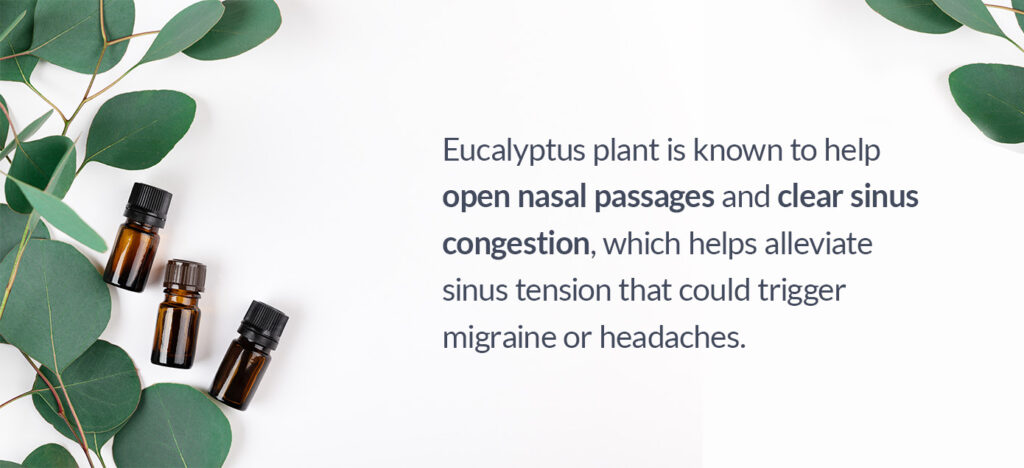
For those who experience seasonal migraine attacks, eucalyptus essential oil may be your new best friend. Eucalyptus is known to help open nasal passages and clear sinus congestion, which helps alleviate sinus tension that could trigger migraine or headaches.
But how does it do that? Eucalyptus oil interacts with our respiratory systems, and when we inhale its active compounds, like eucalyptol (1,8-cineole), it can help to:
- Open nasal passages: Eucalyptol acts as a natural decongestant. It does this by reducing your nasal tissues’ swelling and improving airflow. The eucalyptol alleviates the sinus pressure that often contributes to migraine or headaches.
- Relieve inflammation: Eucalyptus essential oil can also have anti-inflammatory properties. Using it may then help reduce sinus inflammation — a common trigger for sinus-related migraine.
- Promote relaxation: Many people associate the aroma of eucalyptus oil with a calming effect. As a result, stress-induced migraine may also benefit from this oil.
Do essential oils work for migraine?
Potentially. Although some research has been done on essential oils’ soothing effects on migraine and headaches, it remains limited. Some research concludes that the positive results are thanks to the placebo effect.
That said, the research does show that each oil has unique properties that could help with certain types of migraine symptoms through the way they interact with your body or “target” certain areas, like your brain or nervous system. Although the interactions may differ slightly, many may help alleviate inflammation and pain and help you relax. Each of these potential benefits may help ease common migraine triggers like stress, poor sleep and the weather.
You may have more success using essential oils as one part of a larger treatment plan that includes other tools such as keeping a migraine diary or using a medical device like CEFALY. We recommend consulting with a healthcare professional first when considering essential oils as an acute or preventive measure for migraine attacks or headaches. They can set up a migraine treatment plan that is customized for you and your needs. And if you’re highly sensitive to fragrances, you may want to avoid essential oils altogether.
Other alternatives to essential oils for migraine relief
If you’re interested in alternative solutions that do not include medication, there are various other methods you could try.
Medical devices
Consider medical devices like CEFALY. The device works by targeting the trigeminal nerve — a key pathway for migraine pain. It uses external trigeminal nerve stimulation (eTNS) to send precise electrical impulses to the nerve through an adhesive electrode placed on your forehead. These impulses help calm and desensitize the trigeminal nerve over time.
Clinical studies have demonstrated great success with CEFALY users:
- ACUTE mode: Use at the first sign of a migraine to relieve pain. About 79% of users in one study reported pain relief within an hour, and 59% saw their pain intensity drop significantly.
- PREVENT mode: Use daily to reduce migraine frequency. Around 38% of users in one study saw their migraine days decreased by 50% or more with compliant use.
CEFALY is an effective tool for adults who don’t respond to medications or want a drug-free option.
Try CEFALY for Migraine Relief
Lifestyle adjustments
Recommended lifestyle adjustments for migraine can be summarized by the acronym SEEDS:
- Sleep: Try to follow a nightly routine and maintain a consistent sleep schedule. Too much or too little sleep may trigger migraine.
- Exercise: Regular, moderate exercise may help reduce migraine frequency thanks to its circulatory and stress-reducing benefits. Go for a walk or try yoga.
- Eat: Stick to a healthy diet that’s best for you and your needs — try not to skip meals. Also, identify potential foods that trigger migraine, such as caffeine, alcohol, certain cheeses and processed foods.
- Diary: Keep a migraine diary to help you identify your food and other migraine triggers.
- Stress: Focus on managing your stress levels if it’s a common trigger for your migraine attacks. Consider deep breathing exercises, mindfulness and meditation to fight stress.
Alternative therapies
There are various types of therapies for migraine management, such as:
- Cognitive behavioral therapy (CBT): CBT is a type of talk therapy. Its sessions help you identify and change negative thought patterns and behaviors.
- Relaxation therapy: It’s in the name — this therapy aims to help you relax through techniques like progressive muscle relaxation or guided imagery to help reduce stress and tension.
- Biofeedback therapy: This therapy uses sensors to monitor physiological responses like muscle tension or heart rate. It then teaches you to better control those responses to potentially reduce migraine frequency and severity.
- Music therapy: Whether you’re listening or creating music, music therapy can help with migraine by reducing stress or distracting you from the pain.
- Acupuncture: The thin needles are inserted into specific points on the body to help reduce migraine frequency and improve energy flow.
- Pressure points: Applying gentle pressure to areas may relieve tension and reduce migraine symptoms.

Try CEFALY today!
Join tens of thousands of CEFALY users who use our device for migraine management. FDA-cleared and backed by science, this safe, drug-free device offers effective relief and prevention.
Order your CEFALY device today and experience neuromodulation migraine therapy for yourself.




Latest Posts

“CEFALY Gave Me My Life Back”: Camille’s Search for a Drug-Free Migraine Treatment
Discouraged by her experience with medications, Camille began building a toolkit of non-pharmacologic migraine treatments. Find out what…

What Patients Need to Know About Episodic Migraine vs. Chronic Migraine
While official definitions classify episodic migraine as fewer than 15 headache days per month and chronic migraine as…