



A Complete Guide to Vestibular Migraine
If you’ve ever felt off-balance or like the room was spinning without a clear reason, you might have brushed it off as vertigo or fatigue. But what if it’s something more? Vestibular migraine could be the cause.
Vestibular migraine isn’t as well known as typical migraine, as it’s prevalent in about 1% to 2.7% of the adult population. It’s still a debilitating condition. In spite of its name, you may not even experience a headache during an attack. Regardless, a vestibular migraine can impact your daily life.
Learning how to stop vestibular migraine starts by understanding the condition better. Continue reading to find out more.
What is a vestibular migraine?
Vestibular migraine is a neurological condition that targets the central nervous system (CNS). People experiencing vestibular migraine may feel dizzy and off-balance. They might also find it difficult to walk or speak correctly or feel like speaking is hard or impossible.
The word “vestibular” refers to the body’s sensory system responsible for maintaining balance, coordination and spatial awareness. It primarily involves the inner ear and parts of your brain. That’s why people with vestibular migraine, or a medical history of migraine symptoms, may experience repeated dizziness and vertigo.
Vestibular migraine is also called migrainous vertigo, migraine-associated vertigo and migraine-related vestibulopathy.



What makes vestibular migraine different?
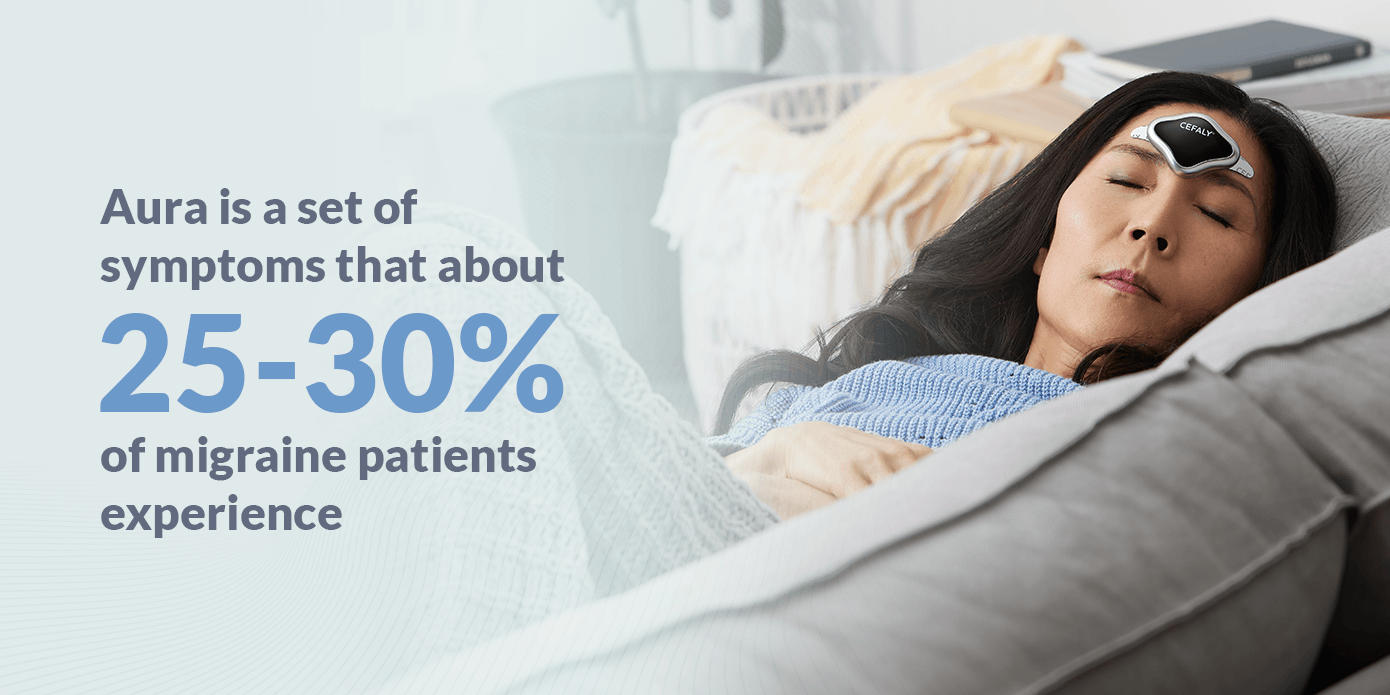
People with “normal migraine,” with or without aura, typically experience a throbbing headache, often on one side of the head. Other symptoms may include nausea, fatigue and sensitivity to sound and light. In some cases, people with migraine may also experience visual disturbances like flashing lights or blind spots — that’s the aura part. There are various common migraine triggers, but these can vary per person.
However, with vestibular migraine, things are a little different. People with this condition may not experience a headache at all. Instead, the main symptom they often experience is vertigo. Vertigo is a feeling of movement or spinning while the person sits still — it feels like the world moves around you. Vertigo can be triggered by outside factors like specific head positions, moving your head or looking at triggering patterns and objects. It might also spontaneously occur despite the lack of triggers.
A vestibular migraine attack results in sensations of significant external or internal vertigo. Due to the addition of such specific symptoms, vestibular migraine has its own category in the International Classification of Headache Disorders (ICHD).
Symptoms of vestibular migraine
Those with vestibular migraine may experience several symptoms or a combination of a few, such as:
- Headaches: Throbbing or severe headaches may occur on one side of the head.
- Nausea: Severe headaches may cause nausea and vomiting.
- Sensitivity: You might be sensitive to smells, noises or light.
- Vertigo: Vestibular symptoms may include vertigo and dizziness, which could last minutes, hours or days.
- Imbalance: Vestibular symptoms may also include loss of balance.
- Motion sensitivity: You might experience sickness or dizziness when moving your body, eyes or head.
- Disorientation: You might become confused or disoriented when experiencing headaches and vestibular symptoms.
Causes and triggers of vestibular migraine
The exact causes of vestibular migraine are unknown. However, scientists have discovered that the condition runs in families and affects more women than men. Many women find that their symptoms worsen during menstruation. While vestibular migraine often affects older adults, children and younger adults also experience the condition.
For some people, the same things that trigger a “normal migraine” could also potentially trigger a vestibular migraine. These would include:
- Alcohol and smoking
- Stress
- Sleep disturbances
- Hormonal changes
- Specific food and drink
- Weather changes
- Certain medications
- Dehydration
Triggers vary from person to person. That’s where keeping a migraine diary can be helpful. Keeping a record of your attacks can help you and healthcare providers understand the condition better.

Diagnosing vestibular migraine
Diagnosing vestibular migraine may require a certain set of criteria. See a doctor and explain your specific symptoms before attempting to self-diagnose. The ICHD and other organizations have set specific criteria to help diagnose the condition.
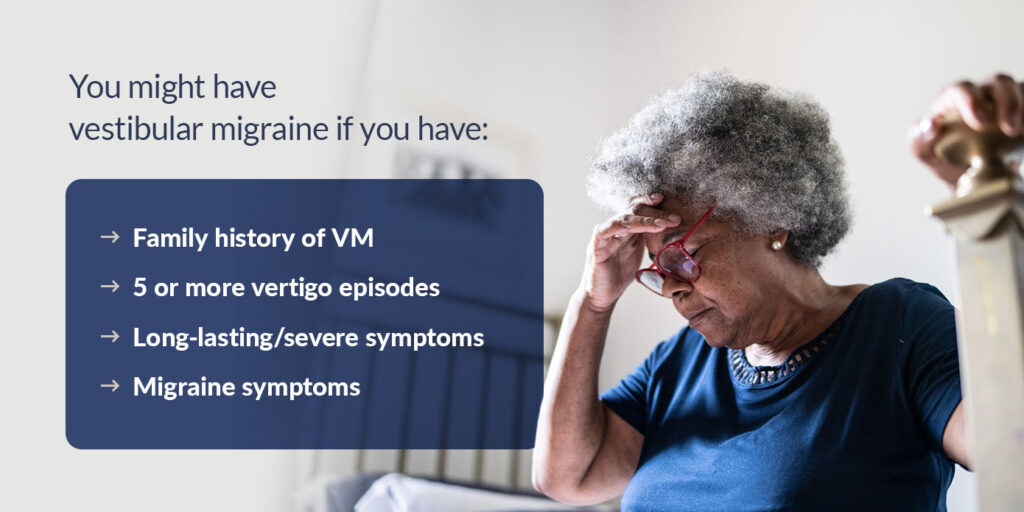
For example, you might have vestibular migraine if you have:
- Family history of vestibular migraine: Many with vestibular migraine have family members who have experienced the same symptoms. You might also have personally experienced such signs in the past.
- Five or more vertigo attacks: You must have experienced five vertigo attacks.
- Long-lasting or severe symptoms: Your symptoms must last between five minutes and 72 hours. Your symptoms must range from moderate to severe.
- Migraine symptoms: You must experience migraine symptoms, such as head pain, loss of vision, nausea or dizziness.
Also, to be diagnosed with vestibular migraine a patient must experience at least one migraine-associated symptom during at least half of episodes:
- Migraine headaches: Headaches are typically one-sided, pulsing, moderate to severe, and/or triggered by movement.
- Light and/or sound sensitivity
- Visual aura: Aura includes flashing or shimmering lights in your vision.
Related conditions
Those with vestibular migraine might also experience Ménière’s disease, benign paroxysmal positional vertigo (BPPV) and transient ischemic attacks (TIA).
Ménière’s inner ear disease is linked to migraine symptoms like vertigo. While many experience symptoms in one ear, it may spread to both. Symptoms may include vertigo, tinnitus, hearing loss and ear pressure. Many with Ménière’s disease can experience vestibular migraine.
Sudden head movements can trigger benign paroxysmal positional vertigo (BPPV) and may cause dizziness or spinning sensations. Many with a vestibular migraine may also have BPPV.
Transient ischemic attack (TIA), also called a mini-stroke, may result from an interrupted blood supply to the eye or brain. It often happens before a stroke and presents similar symptoms to a migraine with aura. If you present any migraine or stroke symptoms, see a doctor immediately.
Vestibular migraine treatment
While there is no cure, you can treat vestibular migraine by managing triggers and symptoms and improving your daily life. The main goal is to reduce vestibular migraine frequency. Here are several ways to find vestibular migraine relief.
Diet
Making changes to your diet can help manage the condition. Neurologist David Buchholz, MD, developed a migraine prevention diet. It lists the following foods to avoid:
- Nuts
- Citruses
- Caffeine
- Chocolate
- Aged cheeses
- Processed meats
- Alcohol or vinegar
- Artificial sweeteners
- Monosodium glutamate (MSG)
However, this strategy can be tricky because the threshold for migraine varies per person. Weather, hormone levels and stress can make us more or less susceptible to migraine. In turn, we might get a migraine due to these outside factors but assume it was because of a food.
Doctors also recommend the vestibular migraine diet, where you eliminate and reintroduce foods to see which specifically trigger your migraine. This strategy uses two different phases:
- Elimination phase: During this period, you avoid all foods that could potentially cause a migraine attack. Then, you monitor your migraine frequency without all these foods.
- Reintroduction phase: After two or three weeks, you can slowly start reintroducing these foods to your diet. Try adding one food at a time over several days, and carefully take note of whether it causes your migraine symptoms to return or worsen.
Medications
You can also try different medications for vestibular migraine. Some of these work best when you take them at the onset of a migraine, while others are taken daily for prevention. Commonly prescribed medications for vestibular migraine include:
- Beta-blockers
- Calcium channel blockers
- Topiramate
- Tricyclic antidepressants
- Selective serotonin reuptake inhibitors (SSRIs) or serotonin–norepinephrine reuptake inhibitors (SNRIs)
Ask your doctor or healthcare provider for more information about these medications and how they might help you.
Supplements
Many people with vestibular migraine find some relief in over-the-counter (OTC) supplements. These supplements can lower migraine frequency and regulate other bodily functions. Overall, certain vitamin supplements work well for vestibular migraine treatment, but always consult your doctor before adding one to your routine.
Here are examples of supplements that might help with vestibular migraine:
- Magnesium
- Vitamin B2 (riboflavin)
- Vitamin D
- Ginger
- Feverfew
- Coenzyme Q10 (CoQ10)
Vestibular rehabilitation therapy
This type of rehabilitation is a specialized type of physical therapy for people who experience dizziness or vertigo. With the right amount of therapy, you could improve balance levels and decrease dizziness. Therapists teach you important exercises you can continue practicing after therapy is finished.
In vestibular rehabilitation therapy, you might complete these exercises:
- Posture and balance training
- Vision stability training
- Stretching and exercise
All of these exercises might differ depending on your therapist and the severity of your symptoms.
Try CEFALY for migraine relief
If you’re looking for a better way to manage migraine, try CEFALY. CEFALY’s wearable electronic device is an FDA-cleared, OTC and drug-free migraine management solution. It’s a noninvasive option that targets the trigeminal nerve — the primary pathway of migraine pain. It uses external trigeminal nerve stimulation (eTNS) to desensitize this nerve to help reduce migraine symptoms.
CEFALY has two modes — ACUTE and PREVENT. The ACUTE mode can help relieve migraine pain at the onset of an attack. The PREVENT mode can help prevent future attacks through consistent use.
CEFALY is also clinically proven to help provide migraine relief and prevention. In various studies:
- 57% of CEFALY users experienced a resolution in their most bothersome migraine symptom.
- 79% experienced pain relief after one hour of using the ACUTE mode.
- 38% of CEFALY users experienced a 50% reduction in migraine frequency with the PREVENT mode.
CEFALY’s effectiveness for treating vestibular migraine has not been studied. If you have vestibular migraine and want to use CEFALY, talk to your healthcare provider. Our 90-day guarantee means you can try CEFALY risk-free! Use the device as directed, and if it doesn’t work for you, you may return it within 90 days of purchase.
Try CEFALY Connected today, or feel free to contact us to speak with a CEFALY representative.



Latest Posts


“CEFALY Gave Me My Life Back”: Camille’s Search for a Drug-Free Migraine Treatment
Discouraged by her experience with medications, Camille began building a toolkit of non-pharmacologic migraine treatments. Find out what…
What Patients Need to Know About Episodic Migraine vs. Chronic Migraine
While official definitions classify episodic migraine as fewer than 15 headache days per month and chronic migraine as…