



Best Supplements for Migraine
Medication isn’t the only answer to the problem of migraine pain. Many people also use supplements to prevent or relieve migraine symptoms — but do they really work? The short answer is yes — some supplements are beneficial for migraine, especially if you have episodic or menstrual migraine.
However, it’s best to consult a healthcare professional before taking new supplements to help with migraine. Your doctor can help you pick the right ones based on your symptoms and nutrient levels. They can also prescribe a safe and effective dosage.
This guide covers a list of migraine relief supplements you can consider as part of your migraine management plan.
Magnesium
Magnesium is a mineral with many crucial functions in the body, but people with migraine often have lower levels of magnesium than the general public. Magnesium deficiency is associated with cortical spreading depression (CSD), a wave of altered brain activity that’s thought to be linked with migraine aura.
The most common magnesium supplement for migraine is magnesium oxide. However, this form of magnesium can cause stomach upset like diarrhea, abdominal cramping or vomiting. You may want to try magnesium glycinate instead if this happens to you. Talk to your healthcare provider before taking any form of magnesium because it can interact with certain medications and health conditions.
Vitamin B2
Vitamin B2 — also called riboflavin — may help reduce the frequency of migraine attacks. Taking riboflavin along with other vitamins for migraine headaches may also alleviate pain. Riboflavin is generally safe and well-tolerated, although it can turn your urine bright yellow and interfere with medications like antibiotics and chemotherapy drugs. Ask your healthcare provider about the correct dosage, as the amount of riboflavin in a standard multivitamin is often too low.
Coenzyme Q10
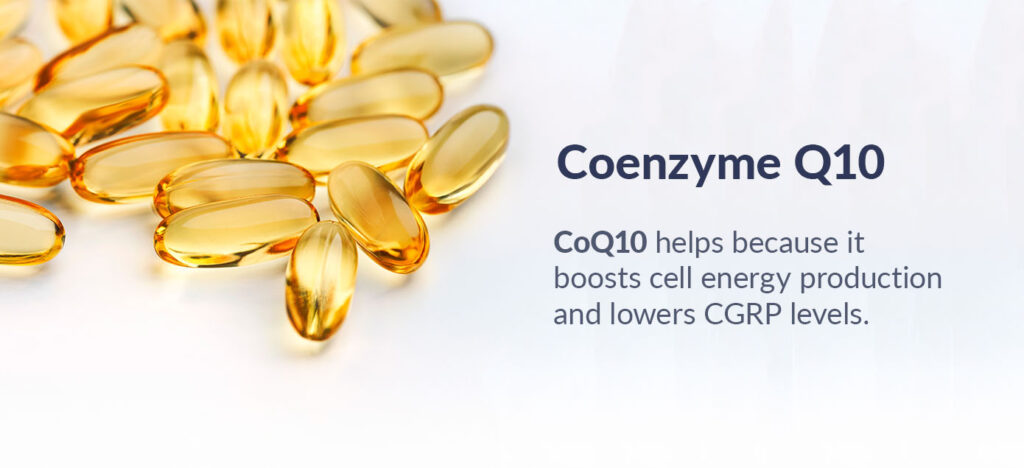
Also called ubiquinone, coenzyme Q10 (CoQ10) is an enzyme that occurs naturally in the body. A review of several studies on CoQ10 and migraine indicates that the supplement can effectively reduce the frequency and duration of migraine attacks.
While the exact reason for this is unknown, researchers believe that issues with brain cell energy production and high calcitonin gene-related peptide (CGRP) levels can worsen migraine. CoQ10 helps because it boosts cell energy production and lowers CGRP levels.
Ginger
Many people rely on ginger to help with migraine symptoms. To date, a few small studies have suggested that ginger can be effective in helping relieve migraine pain, either on its own or when combined with medications. Due to its anti-inflammatory properties, ginger’s primary value as a migraine supplement may be in addressing the nausea and vomiting experienced during a migraine attack. Clinical evidence shows that ginger is effective, inexpensive and has no known adverse effects.
Feverfew
Feverfew is a plant native to western Asia that people believe helps with fevers and headaches. Some scientists attribute parthenolide — a compound found in feverfew — to the plant’s anti-inflammatory properties. While feverfew has no serious side effects, avoid taking it if you are pregnant, as it can cause uterine contractions.




Melatonin
Melatonin is a hormone the brain produces in the dark that helps establish the body’s circadian rhythms, affecting the sleep-wake cycle. Getting insufficient or irregular sleep is a common migraine trigger, and melatonin can help you sleep better.
However, melatonin may interact with some drugs like antidepressants, anticoagulants and contraceptive pills. To be safe, check with your doctor and disclose all your medications before taking melatonin supplements.
Omega-3
Omega-3 fatty acids are healthy fats found mainly in seafood, flaxseed and fish oil supplements. There are three primary omega-3 fatty acids:
- Eicosapentaenoic acid (EPA)
- Docosahexaenoic acid (DHA)
- Alpha-linolenic acid (ALA)
Your body can’t make these acids, so you must get them from your diet and supplements.
Some studies indicate that a diet rich in omega-3 fatty acids may reduce the frequency and severity of migraine attacks. This is because the body converts EPA and DHA omega-6 fatty acids into oxylipins, which can reduce pain and inflammation. However, ALA — derived from plant oils like flax seed and soybean — may increase attacks, so focus on eating seafood or taking fish oil supplements containing EPA and DHA.
Vitamin D
Previous studies show that a large portion of migraine sufferers have a vitamin D deficiency. If you are one of these people, taking vitamin D supplements may help your migraine. Research across multiple studies shows that vitamin D helps reduce the frequency of headaches, particularly for people with migraine.
Vitamin D helps with migraine for various reasons. It increases the absorption of magnesium, which is beneficial for migraine. Vitamin D may also boost the production of serotonin, a chemical that can counteract the migraine process. Additionally, it has anti-inflammatory properties known to alleviate migraine.
Butterbur
Butterbur is a shrub that appears to help reduce the frequency of migraine attacks in adults and children. However, some butterbur products contain chemicals called pyrrolizidine alkaloids (PAs), which can cause liver toxicity. If you want to try butterbur supplements, look for products labeled PA-free.
Try CEFALY for drug-free migraine relief
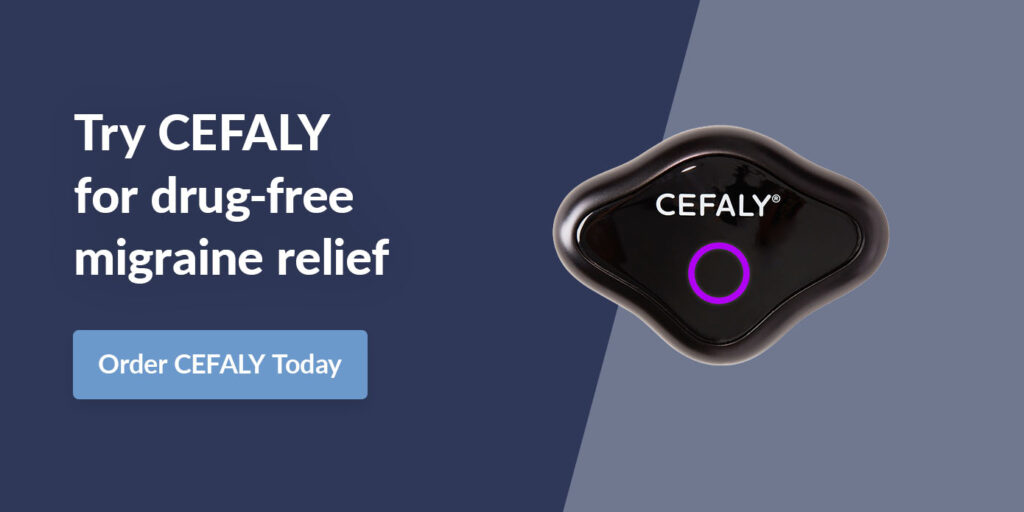
If you’re searching for a drug-free migraine treatment, consider trying CEFALY. CEFALY is an FDA-cleared medical device — available without a prescription — that’s clinically proven to relieve migraine pain and reduce attack frequency. One study on CEFALY revealed that 79% of patients had significantly less headache pain with just one hour of the ACUTE treatment mode.
The device uses external trigeminal nerve stimulation (eTNS) to calm and desensitize the trigeminal nerve — the primary pathway for migraine pain. With consistent, compliant use, a CEFALY device can help you have more pain-free days. Plus, you can try the device risk-free for 90 days with our money-back guarantee.
Get started by purchasing a CEFALY device today!





Latest Posts

“CEFALY Gave Me My Life Back”: Camille’s Search for a Drug-Free Migraine Treatment
Discouraged by her experience with medications, Camille began building a toolkit of non-pharmacologic migraine treatments. Find out what…

What Patients Need to Know About Episodic Migraine vs. Chronic Migraine
While official definitions classify episodic migraine as fewer than 15 headache days per month and chronic migraine as…