




The Prevalence of Migraine Among Military Veterans
Soldiers and veterans are tough – physically, mentally and emotionally. Does this mean they are immune from migraine pain? Absolutely not. Migraine pain hits soldiers and veterans hard and may be triggered by stress, injuries or trauma. Although soldiers may not talk about the pain they feel, it’s still here, impacting their relationships, health and overall quality of life.
If you’re an active duty member or veteran suffering from migraines, know that you’re not alone. Military members are much more likely to suffer from migraines than others. However, there’s no need to suffer in silence. Migraine pain is real and can be debilitating, no matter your background. Seeking treatment for migraine symptoms is one of the best things you can do for yourself, your loved ones and your country.
Keep reading to learn about service-connected migraines and what you can do to find relief.
Veterans Are More Likely to Develop Migraine
According to the Department of Veterans Affairs (VA), deployed veterans are more apt to develop migraines or other headache disorders than the general public. They suffer from migraine symptoms like severe head pain, nausea and dizziness more often than non-veterans.
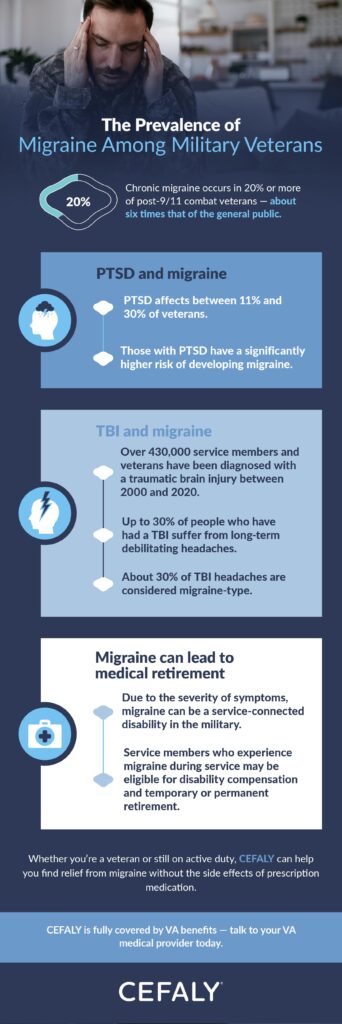
Consider that chronic migraine, a disorder characterized by having 15 or more headaches per month, affects about 3% of the general population. For veterans, that number skyrockets. Research shows that chronic migraine occurs in 20% or more of post-9/11 combat veterans — about six times that of the general public.
Many factors raise migraine risk for veterans and active-duty members. During deployment, soldiers might experience trauma, stress, sleep deprivation, brain injuries and exposure to toxins. These elements could have lingering effects and trigger migraine symptoms, even long after service.
Connections Between Migraine and Other Conditions
As mentioned above, migraines may be linked to the stress and injuries soldiers experience during combat or training. For example, conditions like post-traumatic stress disorder (PTSD), traumatic brain injuries (TBIs) and depression commonly go hand in hand with migraine.
PTSD and Migraines
PTSD is a mental health condition that can lead to many symptoms, like intrusive thoughts and trouble sleeping and is caused by a traumatic event like war. According to Frontiers in Neuroscience, PTSD is a predictor of migraine and is also much more common in individuals who experience migraine — so the two disorders often coexist.
Another study from 2019 supports the idea that migraines are secondary to PTSD, claiming that patients with PTSD have a significantly higher risk of developing migraine than those who do not have the stress disorder. The severity of PTSD can increase the chances of developing migraine further.
Not every veteran will develop PTSD, but they are more likely to have the disorder than people who did not serve. For instance, about 6% of the population will have PTSD. Meanwhile, PTSD affects between 11% and 30% of veterans, depending on their service era. For example, about 12% of Gulf War veterans experience PTSD.
The fact is that soldiers are exposed to traumatic and life-threatening events during combat or while living in war zones. This makes them more prone to PTSD and related conditions, like migraine.
TBIs and Migraines
A TBI occurs when the brain is injured. It’s usually caused by a bump, blow to the head or jolt. Veterans often suffer TBIs resulting from combat or training-related explosions. Over 430,000 service members and veterans have been diagnosed with a TBI between 2000 and 2020.
TBIs can lead to debilitating migraine-like headaches within days of the injury. Sometimes, headaches appear months or even a year after the trauma. Headache is the most common symptom of a TBI, affecting up to 90% of patients who experience head trauma and it’s a major cause of disability in the military.
Migraines and Depression
Migraine symptoms do not just affect a person physically — they also take a mental and emotional toll.
For example, migraine symptoms may trigger or contribute to depression, a mood disorder characterized by persistent sadness. One study found that depression affects 80% of those who suffer from migraines at some point, which is another reason to seek treatment for migraine pain.
Medical Retirement
Coping with migraine is anything but easy. Symptoms like throbbing pain and intense sensitivity to sound and light can be debilitating for anyone – including active duty members and veterans. Due to the severity of symptoms, migraine is a service-connected disability in the military. This means veterans who experience migraines during service may be eligible for disability compensation and temporary or permanent retirement.
The military uses a rating scale to determine whether a soldier qualifies for temporary or permanent retirement. For instance, if you were in active service for less than 20 years and have a disability rating of 30% or higher, you can retire. However, if you served for more than 20 years and have a disability, physicians will recommend you retire from the military, regardless of the rating.
If you’re thinking of staying on active duty but get migraines, you may be wondering if you get can get kicked out of the military or receive a discharge. The simple answer is “yes.” If doctors determine your migraine symptoms prevent you from performing your duties, you may be placed on temporary or permanent disability retirement lists.

Treatment for Migraine
If migraine pain keeps you from living your best life, it’s time to consider treatments. Many options are available to help you find relief, regardless of your military status.
First, consider meeting with your doctor or a headache specialist to discuss your symptoms and explore treatment options. Getting evaluated by a medical professional is important because they can rule out any injuries or anything that may be causing your symptoms. From there, they can develop a treatment plan based on your needs. Common treatments for migraines include self-care practices and stress management.
If you’re a veteran, you can contact your local VA for help. The VA can connect you with a vast network of doctors and provide alternative treatments through its benefits program. For example, a VA neurologist might recommend CEFALY.
CEFALY is an FDA-cleared device designed to reduce migraine pain and the frequency of attacks. CEFALY works by stimulating the trigeminal nerve through gentle electrical impulses, relieving pain as a result.
How Cefaly Can Help
Long after returning from the front lines, many veterans continue to experience combat-related pain and disability, including migraine. One study of US Army soldiers who had returned from a 1-year combat tour in Iraq found that 36% reported migraine, compared to 12% of the U.S. civilian population.[i]
While migraine can often be an inherited condition, many researchers believe the stress and injuries suffered in military service make veterans more likely to develop migraine. “In addition to increased exposure to stressful combat situations, servicemen and women have higher rates of traumatic brain injury (TBI), concussion (mild TBI), or neck trauma; this can be caused by explosions, falls or other accidents. The post-traumatic headache that often follows these injuries dissipates for many within a few months, but in some cases it can persist longer or become chronic – especially if multiple traumas have occurred,” according to the U.S. Department of Veterans Affairs.
More service members have been diagnosed with migraine in recent years. A report by the Department of Defense found migraine diagnoses increased by 27 percent from 2001-2007, during ongoing combat operations in Afghanistan and Iraq. Incidence rates of migraine for male soldiers increased nearly 60% during that time.

Helping Veterans Overcome Migraine
Treating migraine in veterans with polytrauma, traumatic brain injury and/or multiple co-morbid conditions can be complex. Because CEFALY is a drug-free treatment with minimal side effects, it can be an effective part of some veterans’ migraine treatment programs. CEFALY Technology is proud to partner with VA Hospitals across the country to make CEFALY — an FDA-cleared, clinically proven migraine treatment — available to veterans. CEFALY is a small medical device worn on the forehead that sends tiny electrical impulses through a self-adhesive electrode to painlessly stimulate the trigeminal nerve, reducing the frequency and intensity of migraine attacks. It’s cleared for the acute treatment of migraine with or without aura and the preventative treatment of episodic migraine in patients 18 years of age or older.
If you’re a veteran who’s looking for migraine relief, the first step is to make an appointment with the Physical Medicine & Rehabilitation (PM&R) or Neurology department at your nearest VA Hospital. Discuss your symptoms and concerns with your healthcare provider. If he or she determines that CEFALY could be a good treatment option for you, you’ll receive your CEFALY device directly from the VA, or it will be shipped to your home. CEFALY is fully covered under VA benefits.
Learn more about how CEFALY offers migraine relief for veterans
Find Migraine Relief With CEFALY
Whether you’re on active duty or a veteran, CEFALY can help your find relief from migraines without the side effects of prescription painkillers. CEFALY has been used to effectively treat over 2 million veteran migraines, is fully covered by VA benefits and comes with a 90-day money-back guarantee.
Free yourself from migraine pain and try CEFALY today.







Latest Posts


“CEFALY Gave Me My Life Back”: Camille’s Search for a Drug-Free Migraine Treatment
Discouraged by her experience with medications, Camille began building a toolkit of non-pharmacologic migraine treatments. Find out what…

What Patients Need to Know About Episodic Migraine vs. Chronic Migraine
While official definitions classify episodic migraine as fewer than 15 headache days per month and chronic migraine as…