



Migraine Relief vs. Pain Relief: What’s the Difference Between e-TNS and TENS Devices?
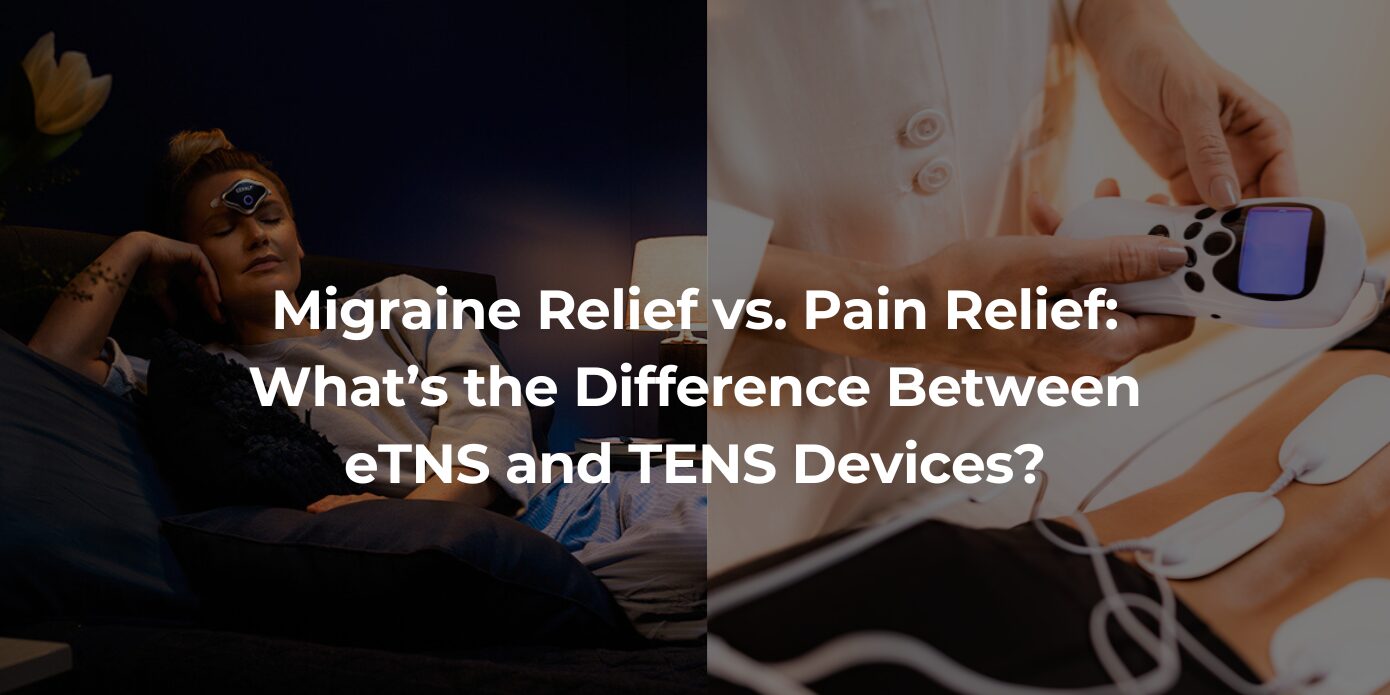
If you’ve ever searched for drug-free ways to manage pain, you’ve probably come across CEFALY, an e-TNS device for migraine pain. But you may also see ads for TENS units that promise pain relief.
While they may look similar—small devices with sticky electrodes that send electrical pulses through your skin—they’re designed for very different purposes.
Transcutaneous electrical nerve stimulation, or TENS, devices target large nerve fibers and even muscle to treat body pain. Can TENS units help with migraine? No: You should never use a TENS device on the head.
External trigeminal nerve stimulation (e-TNS) is the type of neurostimulation CEFALY uses to treat migraine. e-TNS is used only on the forehead, where gentle, precise impulses stimulate the trigeminal nerve.
Curious about CEFALY? Order now. You don’t need a prescription, and you can try it risk-free for 90 days.
What is an e-TNS device?
External trigeminal nerve stimulation (e-TNS) devices, like CEFALY, are specifically designed to treat migraine headaches and other symptoms. These devices target the trigeminal nerve, a major nerve in your face that plays a key role in migraine pain.
Here’s how it works:
- You attach the device to an electrode worn on your forehead, just above your eyebrows.
- It sends gentle electrical impulses through the skin to stimulate the trigeminal nerve.
- This stimulation can help prevent migraine when used daily, or relieve pain when used during an active migraine attack. (For the best results, start treatment at the earliest sign of an attack.)
e-TNS devices are often recommended for people who:
- Want to avoid migraine medications due to side effects, drug interactions, or pregnancy.
- Prefer a non-invasive, drug-free approach to migraine treatment.
- Experience frequent migraine attacks and need a daily preventive option.
CEFALY, the #1 e-TNS device for migraine, has been used since 2008. It’s FDA-cleared, which means the Food and Drug Administration has reviewed the safety and efficacy of the device and authorized its sale. Multiple studies have shown that it’s safe, with no serious adverse effects. The most common side effects are minimal, such as sleepiness, headache, nausea, or forehead redness.



What is a TENS device?
TENS stands for transcutaneous electrical nerve stimulation, and it’s a widely used method for general pain relief. TENS units are commonly used for:
- Back pain
- Arthritis
- Muscle soreness
- Post-surgical pain
- Nerve pain like sciatica or diabetic neuropathy
Here’s how TENS works:
- Electrodes are placed on or near the painful area (e.g., lower back, shoulder).
- The device sends low-voltage electrical pulses to stimulate nearby nerves.
- This can block pain signals from reaching the brain or trigger the release of endorphins, your body’s natural painkillers.
TENS units are available over the counter and can be used at home. They’re popular because they’re portable and customizable (you can adjust intensity and pulse settings). Some TENS units cost under $30, making them an attractive option for people seeking affordable, drug-free pain relief.
TENS units are generally safe, but can be dangerous if used improperly. A TENS unit should never be used on any part of the head or face. It should also not be used on:
- Open wounds, lesions, or rashes
- Swollen, red, infected, or inflamed skin
- Skin that is numb or does not have normal sensation
- The throat
- Both sides of the chest or trunk at the same time
- The backbone
The key differences between e-TNS and TENS
| e-TNS (External Trigeminal Nerve Stimulation) | TENS (Transcutaneous Electrical Nerve Stimulation) | |
| Primary Use | Migraine prevention and relief | General pain relief |
| Target Area | Forehead only (trigeminal nerve) | Areas of the body pain is felt (back, joints, sore muscles). Should never be used on the head or face |
| FDA Clearance | Yes, for migraine treatment | Yes, for various pain conditions |
| Prescription Needed? | Some e-TNS devices are OTC (e.g. CEFALY) | Many TENS units are OTC |
| Mechanism | Modulates migraine-related nerve signals | Blocks pain signals and releases endorphins |
| Side Effects | Mild tingling, skin irritation, sleepiness | Skin irritation, tingling, rare allergic reactions |
e-TNS vs. TENS devices: which one is right for you?
Both e-TNS and TENS devices offer non-drug options for managing pain, but they’re not interchangeable. Think of e-TNS as a specialist for migraine, and TENS as a generalist for everyday aches and pains.
If you’re weighing e-TNS vs. TENS for headache pain, there’s only one safe answer: e-TNS. TENS devices should not be used on the head.
- If you suffer from frequent migraine attacks, especially ones that don’t respond well to medication, an e-TNS device like CEFALY can be a powerful addition to your migraine toolkit.
- If you’re dealing with muscle pain, arthritis, or nerve pain, a TENS unit could offer effective relief.
Always talk to your healthcare provider before starting any new treatment — especially if you have a pacemaker, seizure disorder, or any other medical condition that could be affected by electrical stimulation.
If you’re curious about trying one, start by identifying your primary pain concern and consult with your doctor to find the best fit. Relief might be just a pulse away.




Latest Posts


“CEFALY Gave Me My Life Back”: Camille’s Search for a Drug-Free Migraine Treatment
Discouraged by her experience with medications, Camille began building a toolkit of non-pharmacologic migraine treatments. Find out what…

What Patients Need to Know About Episodic Migraine vs. Chronic Migraine
While official definitions classify episodic migraine as fewer than 15 headache days per month and chronic migraine as…