



The Link Between Migraine and Sleep Disorders
- Connection between sleep and migraine
- Common sleep disorders for people with migraine
- Tips for sleeping better with migraine
The connection between sleep and migraine is bidirectional, which means one can cause the other. Scientists are still exploring the link between the two. We know that too much or too little sleep is a common migraine trigger and that sleep deprivation and migraine are interconnected.
There is a definite link between migraine and sleep disorders. Poor sleep is a leading cause of migraine in people who already have the condition. Migraine can also cause sleep disruption. That’s why it’s important to address these issues together.
The connection between sleep and migraine
Many relationships exist between sleep and migraine, including psychological, physiological and pharmacological ones. Sleep and migraine both happen in the brain. The interplay between the parts of your brain that regulate sleep and the nerves that carry pain sensations to the brain could be the reason for the relationship between the two. Some chemicals in the brain, including orexin and melatonin, relate to both sleep issues and pain. People with migraine also experience much less rapid eye movement (REM) sleep.
Melatonin is a hormone that promotes sleep, and it fluctuates according to your circadian rhythm. Some research suggests that melatonin and other sleep-related hormones may play a role in migraine symptoms. More detailed research is necessary before we can confirm this connection.




Common sleep disorders for people with migraine
Sleep disorders are common comorbidities in people with migraine. While research is still ongoing, some common sleep disorders linked to migraine include the following.
Sleep apnea
A connection exists between sleep apnea and migraine. Sleep apnea is a condition that causes your breathing to pause for a few moments while you’re asleep. Studies show that chronic migraine increases the likelihood of sleep apnea. Treating one may relieve the symptoms of the other. Sleep apnea symptoms include breathing pauses, night sweats and frequent urination.
Insomnia
Insomnia can cause migraine in many people and is a well-documented migraine trigger. Many people living with migraine experience challenges falling or staying asleep. Poor sleep quality in individuals with migraine is much higher than in people without this condition.
These symptoms impact your daily life. They can impair your functioning at home and work and affect your concentration. Over time, you may lose your motivation to complete day-to-day tasks. Migraine attacks and insomnia often create a vicious cycle. For example, migraine attacks interrupt your sleep at night, or you need to sleep them off during the day. Either scenario can throw off your sleep routine altogether.
Try CEFALY to Prevent & Relieve Migraine Pain
Teeth grinding
Grinding your teeth can create another migraine cycle. There is a solid link between teeth grinding, or bruxism, and migraine attacks. Stress or anxiety can cause bruxism, which is subconscious. People with bruxism clench or grind their teeth in their sleep, which can cause temporomandibular joint (TMJ) issues. TMJ problems can cause migraine, and so the cycle continues.
Tips for sleeping better with migraine
As sleep and migraine are connected, it makes sense to address both. Luckily, there are steps you can take to improve both your sleep and your migraine symptoms.
Use CEFALY
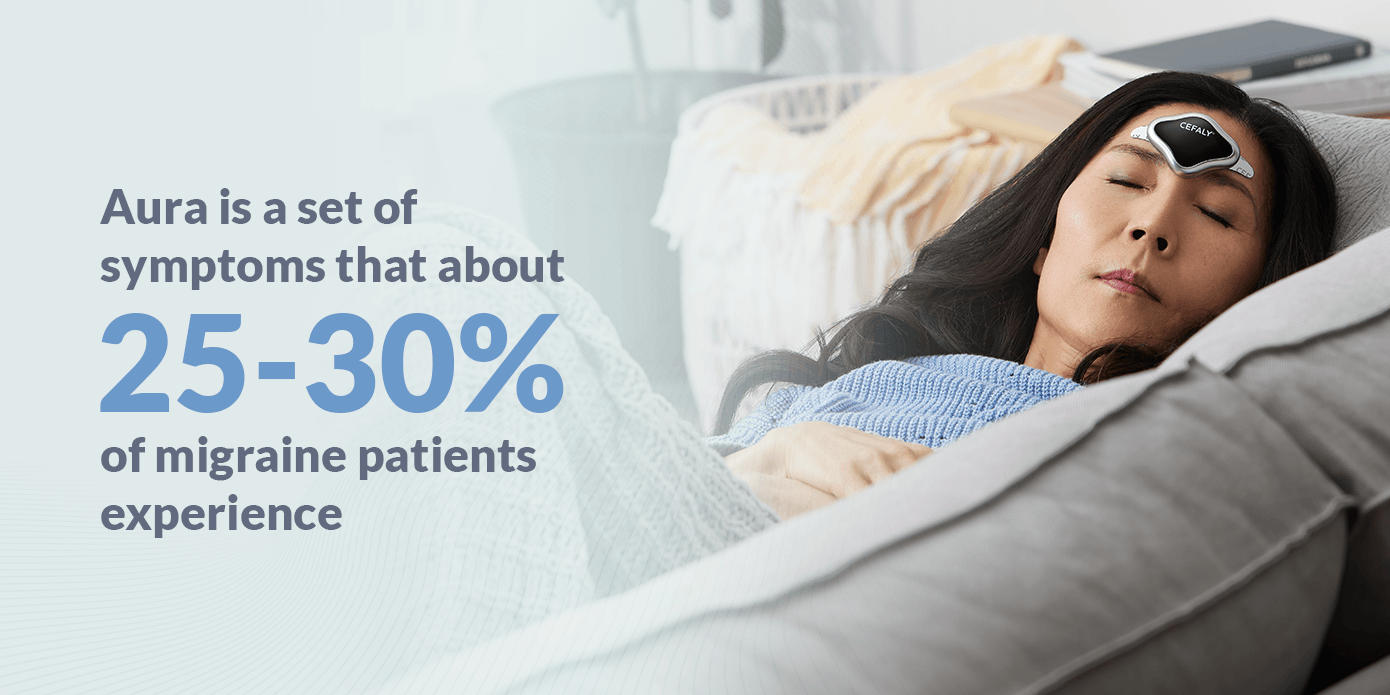
CEFALY is an FDA-cleared migraine treatment device. You wear it on your head and it sends tiny, precise electrical impulses to your trigeminal nerve, desensitizing it over time. You can use CEFALY in two ways:
- ACUTE treatment: The ACUTE setting uses high-frequency stimulation to disrupt the pain signal to your brain. Use it at the first sign of a migraine attack.
- PREVENT treatment: In this setting, your device uses lower-frequency stimulation. Over time, it desensitizes your trigeminal nerve. Use it daily for 20 minutes.
While CEFALY does not treat sleep disorders, many users find that it has a sedative effect, and so it can be a beneficial part of their bedtime routine.
Track your migraine triggers and sleep quality
Gather as much information as possible about the relationship between your sleep and your migraine symptoms. The more you know, the better. You can track your sleep with a smartwatch or similar device. Many of these devices provide data on the length of your nightly sleep and the time you spend in each phase. They measure the quality of your sleep, how often you wake up and the amount of time you spend tossing and turning.
Once you have data on your sleep quality, you can integrate it with the CeCe Migraine Management app. This app offers a simple way to log attacks, identify trends and understand your triggers. You’ll see patterns when you have data on your sleep and migraine attacks. You might notice that you’re more likely to get attacks on days you oversleep, or maybe when you stay up late.
Build an achievable nighttime routine
A solid nighttime routine could be your ticket to migraine and sleep success. The catch is that you need to stick to it, and it needs to be achievable. Rethink your nighttime routine to include less rush and more relaxation. You may find it benefits your migraine and your sleep quality.
Your routine starts with hydration. Try to drink at least 2 liters of water per day. If you drink it all at the end of the day, you’ll have to get up and use the bathroom, which disrupts your sleep. Eating a big meal just before bed can have a similar effect. Stick to light meals that you find easy to digest.

Some other tips for creating an excellent nighttime routine include:
- Wake up and go to bed at the same time every day.
- Dim the lights.
- Play calming music.
- Remove all devices from your bedroom, like your TV and smartphone.
Think about stress management
We all know how challenging it is to sleep when we’re stressed. Stress is one of the most common migraine triggers. It isn’t always avoidable, but there are steps you can take to limit its effect. You can try many relaxation techniques to calm your body and mind, including breathing exercises, progressive muscle relaxation (PMR) and meditation. Where possible, take stressors off your plate.
Experience a drug-free migraine treatment with CEFALY
If you’re looking for long-term migraine prevention, it’s time to try CEFALY. It’s the #1 FDA-cleared wearable device for migraine. In our most extensive study to date, 42.5% of users saw resolution of all migraine symptoms after two hours of ACUTE treatment. It may work for you, too.
Buy your device today and try it for 90 days, risk free.






Latest Posts


“CEFALY Gave Me My Life Back”: Camille’s Search for a Drug-Free Migraine Treatment
Discouraged by her experience with medications, Camille began building a toolkit of non-pharmacologic migraine treatments. Find out what…

What Patients Need to Know About Episodic Migraine vs. Chronic Migraine
While official definitions classify episodic migraine as fewer than 15 headache days per month and chronic migraine as…